



As part of their commitment to raising industry standards and improving the safe use of materials handling equipment, the British Industrial Truck Association (BITA) is championing the UK launch of National Forklift Safety Day (NFSD) on 11th June 2019.
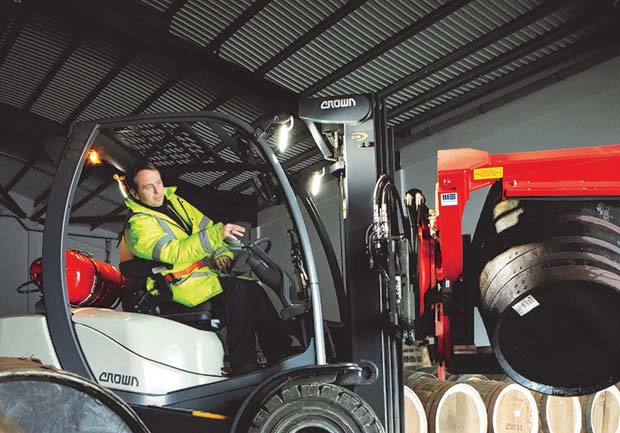
Established six years ago by the Industrial Truck Association (ITA) in the USA, NFSD is aimed at raising awareness of the safe use of forklifts and the importance of proper operator training.
BITA is leading the campaign in the UK and working closely with its members, together with supporting industry associations and other stakeholders, including the Health & Safety Executive (HSE), UKWA, FLTA, CFTS, RTITB, IMHX and others.
In conjunction with the HSE, the key message for the inaugural event is that seat belts save lives and that management is responsible for ensuring operator restraints are always used. Although seatbelts are the most obvious restraint, other physical barrier devices, including door bars or cabins, and software solutions, such as speed monitoring devices and seatbelt interlocks, are also relevant. Accident statistics suggest the new campaign is well timed.
Between 1st January 2016 and 6th March 2019 there were 5,700 RIDDOR (Reporting of Injuries, Diseases and Dangerous Occurrences Regulations) reports involving forklift trucks, of these, 58 relate directly to the driver restraint system. BITA is aware of twelve fatal truck-related accidents in the UK in the two reporting years from 2016 to 2018, at least three of these deaths could have been prevented had the operator worn a seat belt.
There is no legal requirement to wear seat belts, but it is good practice to adopt the measure and it is a message that should be spread around the materials handling industry. Whilst retro fitting of seat belts is taking place, this will only be effective if people use them.
As an inducement, most machines are now being fitted with indicator warning lights which activate when the belts are not being used. Technology is also helping, with sensors being activated when the seat belt is not in use and the performance of the truck is restricted.
The HSE is determined to eliminate bad practice from the industry and has already shown its willingness to prosecute firms who flout the regulations, with substantial fines being levied against companies found guilty of failing to ensure the safety of workers.
The HSE has also stipulated that a company policy document combined with basic training is insufficient in meeting legal requirements. All firms have a legal duty to supervise and enforce safety policy on their premises. There is plenty of help and advice available to the industry so management can have no excuse for not complying with the current HSE legislation.
James Clark, Secretary General, BITA said: “Despite clear evidence that fatalities are prevented if the operator is wearing a seat belt when counterbalance trucks overturn, lack of enforcement by supervisors means there are still deaths and serious injuries recorded each year. This is a failure of management to meet its legal duty to implement and rigorously enforce a company policy on the use of operator restraints in their fleet.
“We all have a responsibility to ensure that site managers and end users, as well as the operators, not only know what is safe, but also understand why it is safe. Both knowledge and understanding are prerequisite to ensuring a safe working environment. National Forklift Safety Day provides a forum for everyone to engage and promote all aspects of safety in, and around, industrial trucks.
“Whilst 11th June provides the focal point for raising awareness, this is only a start. To prevent needless deaths and serious injuries in the materials handling industry, we must strive to make every day National Forklift Safety Day.”
BITA members are being encouraged to promote the initiative by joining the social media campaign and using the dedicated hashtags #NFSD19 and #nationalforkliftsafetyday while further information is available at www.bita.org.uk
BITA
Comments are closed.