



Welcome to the May 15th issue of Warehouse & Logistics News. With order volumes increasing and delivery timelines tightening, warehouse efficiency is drawing greater attention from logistics and supply chain operators. Exporta, which operates as a certified carbon-neutral business, is positioning reusable containers and crates as part of a broader shift away from single-use packaging. The company says its products are designed for long-term use and can be recycled at the end of their service life, reflecting the growing focus on sustainability within warehouse and distribution operations.
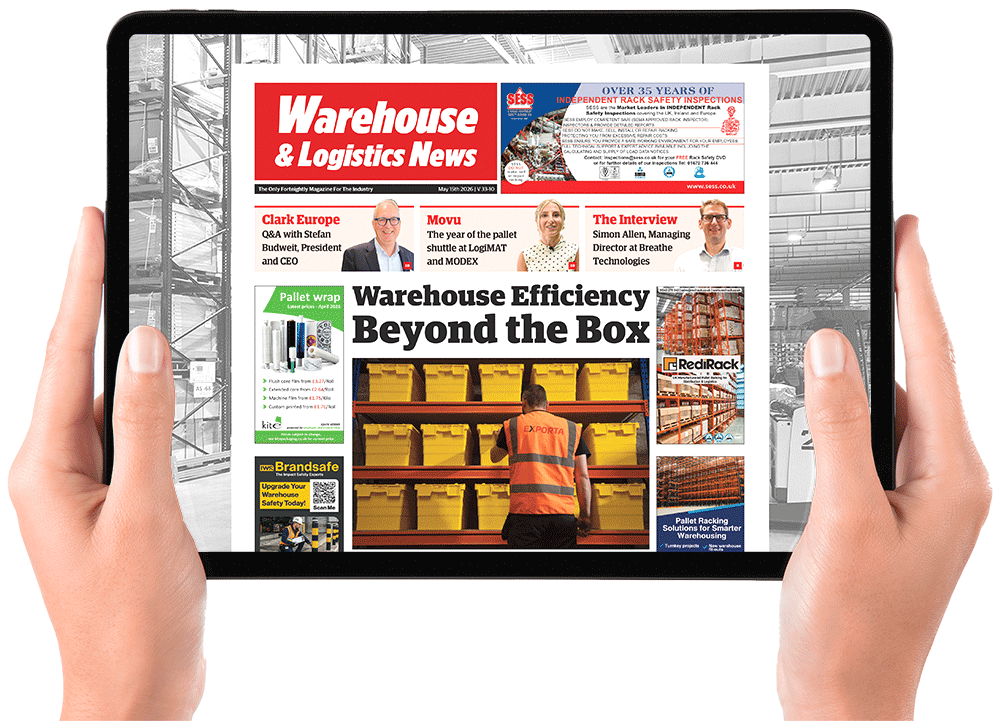
CLICK HERE to read the May 15th digital edition
Toyota Material Handling Europe has cut the cradle-to-gate carbon footprint of its Toyota Lifter LHM230 hand pallet truck by 18 per cent after switching to SSAB Zero™ steel for the product’s forks and frames. The change forms part of the company’s wider plan to achieve net-zero emissions across its value chain by the 2041 financial year.
CFTS, the national standard for Thorough Examinations, has warned that some workplace equipment may require additional inspections under “exceptional circumstances” to remain compliant with the Lifting Operations and Lifting Equipment Regulations 1998 (LOLER). While many employers ensure routine inspections are carried out in line with HSE requirements, CFTS says the need for extra examinations is sometimes overlooked.
As sustainability regulations tighten across Europe, FMCG producers and other businesses are under increasing pressure to reduce environmental impact without disrupting operations or driving up costs. Tosca, working with Cabka, has introduced a Euro-sized circular pallet aimed at automated and regulation-compliant supply chains, with an emphasis on consistency and reliability in large-scale, automated environments.
Optimising stretch wrapping is increasingly focused on process performance rather than simply reducing material use. Across the packaging sector, companies are paying closer attention to selecting appropriate films, applying them correctly and ensuring equipment is set up to deliver consistent, measurable outcomes. Structured audits, such as Antalis Packaging’s stretchCONSULT programme, are being used to assess wrapping operations, identify inefficiencies and challenge established practices across entire sites.
UPN will mark 25 years in operation in 2026, having grown from a small group of regional hauliers into a nationwide network of more than 100 independent transport operators. Established in 2001, the network now provides full UK coverage alongside international services across 26 European countries. Rather than pursuing rapid expansion, UPN has always focused on consistency and service reliability, with growth supported by selective membership and investment in central hub operations. This approach has helped underpin demand for multi-site distribution that combines national reach with local delivery expertise.
Enjoy reading the issue.
James Surridge
Publishing Editor
Comments are closed.