



Every warehouse shares the same fundamental goal: helping to ensure that every worker – and anyone affected by their activities – goes home safely at the end of the day.
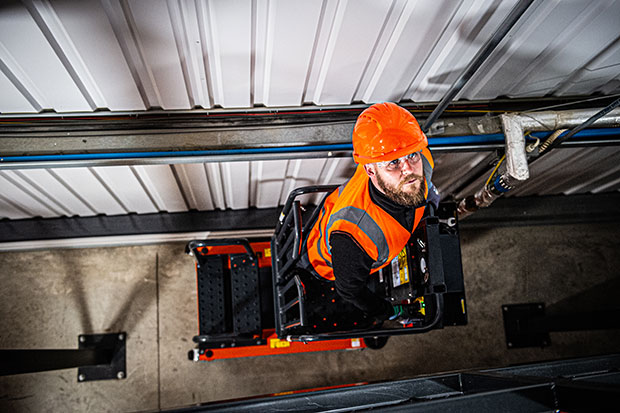
Yet even when teams believe they have done everything right, incidents can still occur. So, how can warehouse operations help turn incident reports into actionable safety improvements, covering streamlined reporting, accident analysis, prevention strategies, and fostering a safety culture?
“In warehouse environments, where operations are fast-paced and risks exist such as working at height, whether for, installations, inspections, or maintenance, even strong safety systems can be tested,” says Samuel Butterworth, Business Development Manager UK & I-LLA for JLG Power Towers. “Reporting plays a vital role in supporting the reduction in injuries and incidents. However, its true value is realised only when reports are translated into meaningful safety improvements.”
For warehouse operations and safety leaders, JLG Power Towers advises turning incident data into action with a structured approach built around four pillars: streamlined reporting, thorough accident analysis, effective prevention strategies and a strong safety culture.
Streamlined reporting
A safety system is as strong as the information it captures.
Reporting tools should be simple, accessible and easy to understand. The easier it is to report incidents or near misses, the more complete and valuable your safety data becomes. If reporting an incident or near miss feels burdensome, valuable information will be lost.
Digital EHS systems can help improve reporting rates by allowing employees to submit reports quickly via mobile or tablet devices. Ease of access can reduce barriers and encourages consistent reporting, especially for near misses, which are often underreported but may provide critical learning opportunities in high traffic warehouse zones.
Accident Analysis
Investigating incidents thoroughly is essential to identify the true root cause. Without proper analysis, corrective actions may only address symptoms, leaving underlying risks in place and increasing the likelihood of recurrence.
Common and effective tools include the 5 Whys technique and fishbone (Ishikawa) diagrams. The 5 Whys method systematically explores underlying causes until the root issue is identified. Fishbone diagrams help teams examine contributing factors across categories such as materials, methods, processes, human factors and equipment.
With falls from height remaining a leading cause of workplace fatalities in the UK, applying structured investigation methods can significantly improve the selection of effective control measures.
Prevention Strategies
Prevention is always better than cure. When planning any task, the first question should be: Is there a safer way to achieve this outcome?
HSE guidance is clear – if work at height can be avoided, it should be. Where it cannot be eliminated, controls should follow the recognised hierarchy:
•Elimination
•Substitution
•Engineering controls
•Administrative controls
•Personal Protective Equipment (PPE)
Engineering and collective safety measures should form the foundation of any prevention plan, supported by policies, procedures and training.
Monitoring and data collection are equally important. Tracking incident trends and reviewing system effectiveness enables continuous improvement.
Limited automated usage data for low-level access equipment can make proactive risk management more challenging for warehouse and operations managers. However, the industry is increasingly exploring scalable technology solutions, including telematics and load-sensing capabilities, to provide better usage insight and support safer decision-making.
Fostering Safety Culture
Even the most robust safety systems depend on people feeling responsible, supported and empowered.
A strong safety culture is built through open discussion of incidents, a genuine no-blame approach, regular safety briefings, visible leadership commitment and recognition of proactive safety behaviours.
When warehouse operatives feel confident to report concerns and contribute ideas, organisations move from reactive safety management to proactive risk prevention.
“At JLG Power Towers, we believe that providing the right tools and fostering collaboration can help create not only safer environments, but stronger teams. We are better together,” says Samuel. “Warehouse incident reports should never sit idle in a database. When supported by streamlined reporting, structured analysis, preventative planning and a strong safety culture, they can become one of the most powerful tools in supporting risk reduction and protecting people.”
Comments are closed.