



The conversation around warehouse safety has evolved significantly in recent years. Once dominated by basic compliance and reactive measures, the industry is now increasingly focused on prevention, design-led safety, and long-term risk reduction. Nowhere is this shift more visible than at the loading bay.
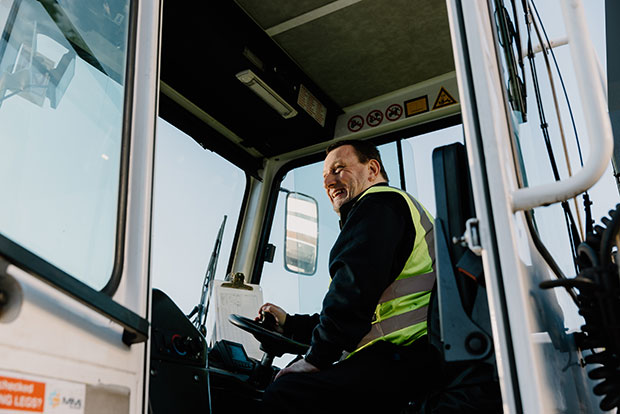
Across the UK warehousing and logistics sector, safety is increasingly being viewed not just as a legal requirement, but as a strategic opportunity to protect employees and improve performance. Loading bays, where vehicles, forklifts and personnel converge, are central to this shift. Rather than being seen purely as high-risk zones, they are increasingly recognised as environments where smarter design can deliver meaningful improvements.
Official figures from the Health and Safety Executive (HSE) reveal that workplace transport incidents remain a significant concern. In Great Britain, being struck by a moving vehicle accounts for around 16% of all fatal work-related injuries, with an average of 21 lives lost each year. These incidents often occur in environments where vehicles and people operate in close proximity, such as loading areas and yards.
Other HSE data highlights that each year over 50 people are killed and more than 5000 are injured in accidents involving workplace transport, including loading and unloading operations. While these figures underscore the importance of effective risk management, they also point to the opportunity for preventative solutions that reduce risk without slowing operations.
Rather than focusing solely on compliance or reacting to incidents after the fact, more organisations are adopting a proactive safety mindset. The question is no longer just “Are we meeting regulations?” but “How can we make loading bays safer by design?” This shift reflects the reality that well-designed safety systems can support operational flow, boost confidence among staff, and reduce costly disruptions.
Engineered safety systems are one of the tools driving this change. By integrating protection directly into the everyday workflow, these solutions help ensure that safe practices are the default rather than something that depends entirely on individual decision-making.
Salvo, a brand that falls under the Sentric Safety Group, has specialised in this approach for more than two decades. Its systems operate on a trapped key interlocking principle, requiring operators to complete each stage of the loading process before the next can begin. This physical sequencing removes ambiguity and reduces reliance on memory or manual checks alone, helping teams work confidently and consistently.
As Brent Dean, Global Product Manager for Salvo, explains: “Embedding safety into the process means teams can focus on their job with clarity. When the system supports the correct sequence, you have protection built into the operation, not bolted on afterwards.”
This design-led philosophy is increasingly resonating with warehouse managers across sectors where loading bay activity is high, from retail distribution to manufacturing and cold storage. Flexibility remains vital; because no two facilities are the same, safety systems need to adapt to different layouts, vehicle types and workflows while still maintaining robust protection.
Salvo’s forthcoming product launches are designed in collaboration with customers facing changing demands and aimed at enhancing safety without impeding productivity.
For UK operations facing mounting volumes and tighter delivery windows, this proactive approach to safety offers multiple benefits. Reduced incidents mean fewer unplanned stoppages, lower insurance costs and stronger team morale. Importantly, it also helps companies demonstrate a genuine commitment to employee wellbeing – a factor that matters to staff and customers alike.
In a landscape where the pace of logistics continues to grow, the loading bay will remain a focal point of both risk and opportunity. Organisations that view safety as a foundation for performance rather than a box to tick are likely to build stronger, more resilient operations.
By investing in preventative systems and fostering a culture that values safety by design, the industry can make loading bays not only safer, but smarter too, and in doing so will protect their people while enabling smoother, more efficient workflows.
Comments are closed.