



Small mistakes in connector selection, installation, or maintenance can quietly undermine even the best-equipped conveyor systems. Unplanned downtime due to simple connector errors is a persistent risk in fast-paced warehouse environments. By understanding and addressing key mistakes, teams can improve reliability and keep operations running smoothly.
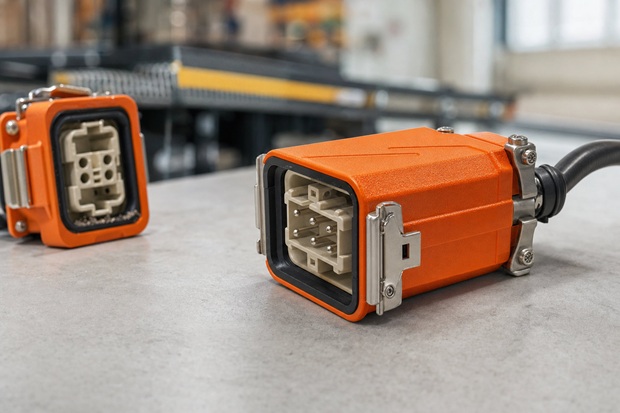 Warehouse teams rely on connectors for consistent power, signal, and sensor communication across conveyors. However, even a well-designed system is vulnerable if common errors are overlooked. By examining the seven most frequent connector mistakes, including examples with HARTING connectors, it becomes possible to take targeted action against hidden sources of downtime. Each mistake covered here is a preventable issue that, if addressed proactively, can support warehouse efficiency and equipment longevity.
Failing to match connector specifications to application requirements
One of the most common errors is using connectors without carefully matching their technical specifications to system demands. This includes overlooking factors such as current and voltage ratings, ingress protection (IP) levels, and mating cycle durability. A connector rated for lower loads or offering minimal dust or moisture protection may quickly deteriorate in harsh conveyor settings, leading to intermittent faults.
For example, using connectors not designed for repeated plug-unplug cycles can result in worn contacts or mechanical failures after only a short period. Reviewing environmental and electrical demands, then choosing connectors built for the expected conditions, reduces vulnerability to early wear, performance drops, and unexpected stalling of the conveyor.
Poor strain relief and cable support
Connectors are frequently subjected to cable movement, tension, and vibration, especially in automated conveyor systems. Failing to use proper strain relief mechanisms allows cables to pull on terminal points, causing internal fatigue and eventually breaking conductors or loosening connections.
Cable support structures and specified bend radii help limit tension at terminations. Without them, wires may experience slow degradation and develop hard-to-diagnose intermittent outages. Employing suitable strain reliefs and ensuring all cables are securely routed can prevent these protracted failures and improve long-term connector reliability.
Incorrect installation techniques
Improper installation, such as over-tightening or under-tightening connector components, increases the risk of loose contacts and weakened seals. Skipping installation steps, such as mechanical locking, can also lead to connectors disconnecting under vibration or shock.
Technicians must follow torque specifications and assembly instructions precisely for each connector type. This includes proper use of cable clamps, seals, and locking features. Even small errors during installation can later trigger breakdowns or faults, especially in busy warehouse environments with frequent equipment movement.
Neglecting regular inspection and maintenance
Routine maintenance is vital for identifying early warning signs on connectors, like corrosion, dust accumulation, or terminal loosening. Many teams, however, treat connectors as “fit-and-forget” components, overlooking scheduled checks and simple preventive cleaning.
Dust and environmental contaminants can interfere with signal transmission, while unchecked corrosion gradually undermines reliable electrical contact. A planned inspection programme, tailored to environmental risks and connector use frequency, is essential to catch developing issues before they cause surprise stoppages.
Using mismatched or incompatible components
Combining components from different manufacturers or models without verifying compatibility is a surprisingly common source of downtime. Connectors that do not fit together precisely may fail to maintain proper electrical contact or allow contaminants into the system.
Warehouse installations should always prioritise connectors and accessories that are designed and tested to work together. Consistent specifications and mechanical compatibility reduce the risk of mechanical strain, leakage, and incorrect wiring, each a possible root cause of conveyor faults.
Overlooking environmental protection requirements
Conveyor systems operate in environments with dust, vibration, moisture, and temperature changes. Choosing connectors with inadequate IP ratings or material properties for these conditions exposes systems to increased failure rates, as contacts become corroded or housings are damaged by impact or cleaning fluids.
Assessing the operating environment and matching connector protection ratings accordingly can safeguard against downtime. This includes using enclosures, seals, and robust materials that can withstand the specific risks present in the warehouse setting.
Ignoring modularity and ease of maintenance
Failure to consider modular and easily accessible connector solutions leads to extended repair times during faults. If connectors cannot be quickly disconnected and replaced, technicians may need to dismantle large sections of conveyor, significantly increasing downtime.
Specifying modular connectors with clear labelling and easy access points enables faster isolation and correction of faults. Integrating these solutions at critical locations improves troubleshooting efficiency and supports long-term warehouse performance by reducing unnecessary delays when repairs are needed.
Each of these seven connector mistakes can result in costly, unplanned downtime for conveyor systems. Proactively addressing specifications, installation quality, maintenance practices, compatibility, environmental protection, and modularity provides a practical foundation for maximising conveyor uptime and ensuring reliable warehouse operations.
Comments are closed.