



By Rebecca Marsden, SVP of Commercial and Strategic Partnerships at Oxa
Automated material handling has historically relied on static, highly standardised workflows. While fixed infrastructure like conveyor networks remain essential for high-density continuous linear throughput, expanding them is capital-intensive and inherently rigid. Similarly, mobile automation, such as Automated Guided Vehicles (AGVs), typically involves the following of fixed paths created using magnetic tape or floor-embedded wires, or operation within fenced-off areas.
 Today, enabled by Physical AI, the logistics industry is shifting towards Industrial Mobile Autonomy (IMA). Instead of being forced to adapt environments to accommodate machines, operators can now benefit from intelligent vehicles that will adapt dynamically to their environments.
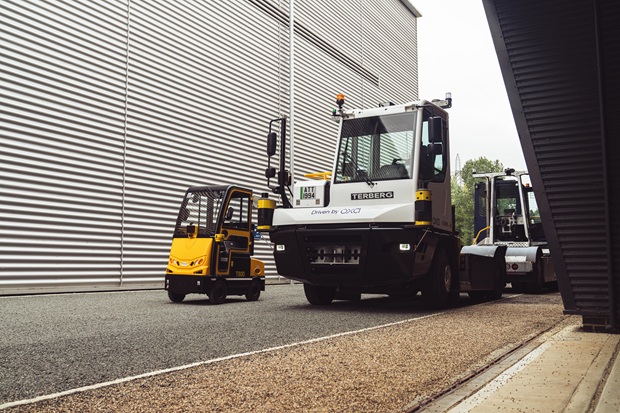 Navigating using onboard sensors, such as cameras, radar and lidar, autonomous vehicles can dynamically reroute as well as seamlessly handle indoor/outdoor transitions and variable weather. This has the potential to drastically improve the resilience of the whole system.
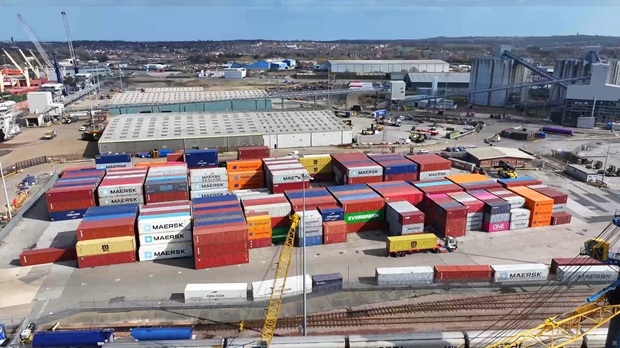 Intelligent Fleet Orchestration
A limitation of early mobile automation was the emergence of vertical ‘walled gardens’, where vendors built deep but narrow solutions confined to single tasks. However, there are now solutions that enable logistics operators to run a diverse, mixed autonomous fleet on a single, unified platform, eliminating vendor lock-in and simplifying mixed-fleet management.
The deployed autonomy solutions must adhere to rigorous regulatory compliance and carry a CE marking. The machinery directive provides the necessary framework under which it is possible to produce a product capable of deployment across a range of customer sites without the need for infrastructure changes – significantly accelerating deployment speed. This streamlined approach is further strengthened by the availability of solutions that have been independently validated and endorsed by bodies such as TÜV SÜD, providing a globally respected stamp of quality and safety.
And of course, systems integration must still be frictionless. Autonomous fleets must connect seamlessly to existing Terminal Operating Systems (TOS) and Warehouse Management Systems (WMS) via secure APIs.
Building Trust in Autonomous Machines
For autonomy to succeed, it must work for the workforce. Low reliability with any technology leads to worker frustration as well as safety concerns. To continue to build trust between the human workforce and autonomous machines, solution providers must prioritise safety as well as explainable AI.
Crucially, the technology must fit seamlessly into an operating environment. To improve the day-to-day worker experience, systems should be designed to minimise cognitive load. Using intuitive Human-Machine Interfaces (HMIs) such as acoustic devices and lighting to indicate what the vehicle is doing will help workers better understand the vehicles operating around them.
Autonomy can positively shift manual operators into high-tech supervisory roles, moving from a driver to a Fleet Operator or Mission Controller, lowering the risk of accidents caused by human error. However, employers must also provide clear paths for upskilling.
Real-world Examples
The commercial viability of autonomy is validated by recent deployments. On April 21, 2026, the Port-Connected and Automated Logistics (P-CAL) project completed a UK-first trial at the Port of Tyne, operating a fully autonomous terminal tractor in live quayside traffic alongside active crane movements. Supported by the UK Government’s CAM Pathfinder program, P-CAL proved that existing terminal tractors can be successfully retrofitted – turning them into a secure, digital workforce.
Similarly, DHL Supply Chain completed a live airside deployment at London Heathrow Airport, where an autonomous vehicle, driven by Oxa, navigated 1,300 kilometres over 14 days in active airport traffic. This project established a scalable framework for the use of autonomy within inter-terminal baggage transfers and further airport services.
For warehouse and logistics operators, the future of material handling lies not in rigid, fixed infrastructure, but in flexible, intelligent, and certifiably safe autonomous solutions, powered by Physical AI.
Comments are closed.