


Most warehouses aren’t broken. They’re just not working as hard as they could. Time, labour and margin are leaking out in places that are hard to see from inside a WMS.
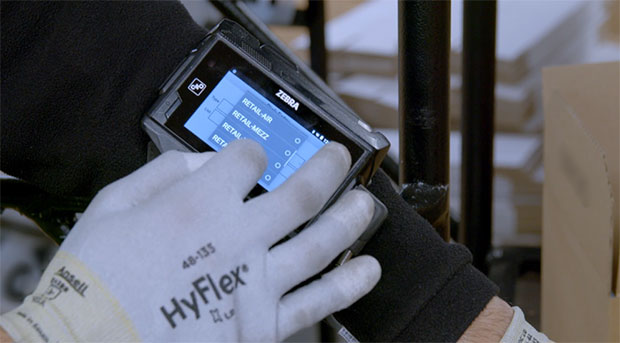
That’s the starting point for Breathe Technologies, the UK systems integrator behind BreatheIQ, a standalone software suite that optimises both manual and automated processes. Experts in warehouse optimisation and orchestration, Breathe brings together its proprietary software platform with a partner portfolio spanning robotics, sorters, wearables and more.
An intelligent layer, not a replacement
BreatheIQ (formerly Orquestr8) is a software platform that enables the rapid development of microservice-based solutions, connecting to any modern WMS via API. It sits between the WMS and the warehouse as an intelligent layer — coordinating people, processes and automation in real time, and driving profitability through decisions that reduce waste.
In practice, most warehouses are running a mix of legacy software, varied automation and a manual workforce. BreatheIQ is built with that in mind. It’s highly configurable, giving operations teams the freedom to make changes quickly outside the WMS, increasing visibility and control across processes.
Where AI makes an impact
AI has a significant role to play in the supply chain, but it isn’t a single thing, and it isn’t the right tool for every job. Breathe takes the view that AI is applied where it produces a measurable result.
The clearest example is PickIQ, Breathe’s pick optimisation module. Picking is exactly the kind of problem AI handles well; interconnected variables, multiple competing objectives and decisions that need to be made in real time. PickIQ uses Computational Intelligence, a branch of AI built around nature-inspired algorithms, to work out the optimal batching and route for every pick wave. In live manual and hybrid picking-robot operations, it has cut pick walking distance by up to 50% and improved productivity by up to 35%, with a direct effect on throughput, accuracy and labour cost.
Elsewhere in the suite, orchestration and rules-based logic do the heavy lifting. The BreatheIQ WES, for instance, operates as the execution layer between the WMS and the physical warehouse, controlling how work is released, sequenced and completed across people and automation, all the time providing real time reporting.
Looking ahead
The next five years in supply chain will be defined by who gets the most out of their system, and this is the focus of conversations Breathe is having.
AI and Automation, a people strategy. The biggest gains aren’t from cutting heads but from reducing reliance on expensive temporary labour and investing in the training and capability of the core team. This is how AI and automation improve the whole operation.
Competitive advantage through agility. Software systems and AI are becoming critical for their ability to connect systems and enable agility and scalability.
Rising customer expectations. Faster fulfilment is no longer a differentiator but an expectation that continues to reshape how warehouse operations need to perform.
The value of data. Most automated sites are already collecting data but using it at a basic level. This is where AI comes in; forecasting, anticipating demand, reacting to change in real time, and making informed decisions.
However, AI still needs a human eye. It’s excellent at repetitive tasks done quickly and accurately. It isn’t a strategist. The role of the optimisation expert is to know where the line sits.
Built for what comes next
New automation, robotics platforms and AI-driven tools are arriving constantly, and the agility and advantage comes from how intelligently that hardware is orchestrated and the operational insight provided. BreatheIQ is built precisely for that, the platform is designed to evolve as new technologies, including new AI capabilities across the wider framework come into play.
Comments are closed.