



Understandably the focus on an automation project is about return on investment with operations teams needing to prove the numbers before anything gets signed off. That conversation hasn’t gone away, but new research suggests it’s not where a lot of projects get stuck.
 Interact Analysis’s latest global Voice of Market survey, published in June 2026, found that 45% of respondents cited integration complexity as the single biggest barrier to adopting more automation, ahead of high upfront costs (41%) and budget limitations (38%).
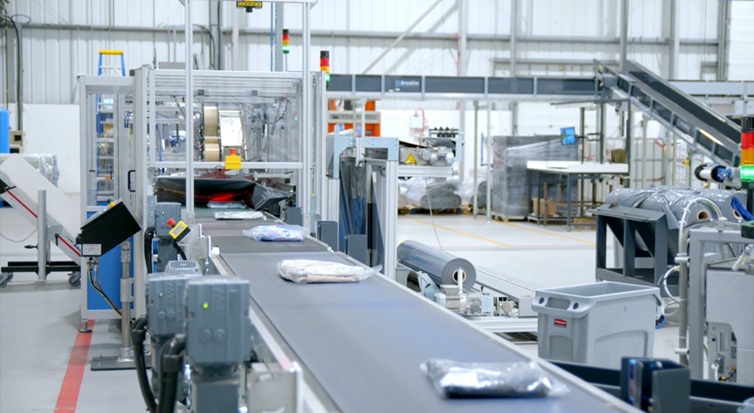
It’s a pattern many supply chain operators will recognise. A warehouse can accumulate a WMS, from a relatively young five years old to a much older legacy system, alongside automation systems such as sortation or more recent robotics chosen to solve specific problems in the warehouse’s growth journey, with the result that none of it truly works together. Instead, they create blind spots, manual workarounds and accumulate data that doesn’t join up. While the automation is there, the orchestration is limited.
Starting with your data
This was one of the recurring themes at Warehouse 2026, where we sat on panels discussing what’s driving return on warehouse system and technology investment. The consensus was that the first, and most overlooked step is understanding your current operation. What’s your real performance today? Where is time, labour and margin being lost?
That’s easier said than done. Sales data, warehouse operations data and finance data usually sit in different systems that were never built to talk to each other, so pulling together a representative baseline often takes a lot of effort before being able to focus on a single piece of automation. It’s not a straightforward step, but it’s the one that pays off, because it tells you where your bottlenecks and operational challenges are, and gives you something concrete to measure against once a solution is live.
This is something we do with every client: know where you’re starting from, then design the solution and the integration layer.
Modular, scalable automation systems
Modular, phased automation is becoming the default, with businesses scaling investment in line with demand and the actual operational need rather than committing to one large system for a decade. That’s a sensible response to a volatile market, but it multiplies the integration challenge. Every additional module and every new automation partner is another connection that needs to work with what’s already there.
At the same time, the hardware side of the market is consolidating. The first half of 2026 saw a wave of robotics M&A activity, with established players acquiring specialist robotics and AI businesses to fill portfolio gaps rather than build from scratch. As that consolidation continues and hardware becomes more standardised, what separates a smooth operation from a fragmented one is increasingly what sits between the automation and the business systems, orchestrating how work is sequenced, how people and machines interact, and how performance is measured in real time.
At Breathe Technologies, this is the layer we focus on. Our BreatheIQ software platform sits between the WMS and the physical operation, connecting disparate hardware and software so it functions as a coordinated system rather than a collection of separate investments. That same orchestration also gives operators room to absorb unpredictable pressures on the business, whether that’s a tightening labour market or a policy shift such as the recently proposed higher business rates on large warehouses, without having to unpick fixed automation investments to respond. We’re helping our customers manage labour costs, traceability and productivity based on an accurate picture of where they started from.
The next few years in supply chain technology will be shaped less by who has the newest technology, and more by who can connect what they already have, and what they add next, into something that works together, giving them the flexibility to absorb the latest changes and challenges. Getting there starts with understanding exactly where you are now.
Comments are closed.