



By Yusen Logistics
Retail and FMCG supply chains are operating in an increasingly complex environment. From shifting consumer demand and omnichannel fulfilment to rising costs and sustainability targets, businesses are under pressure to do more with less while maintaining service levels and protecting margins.
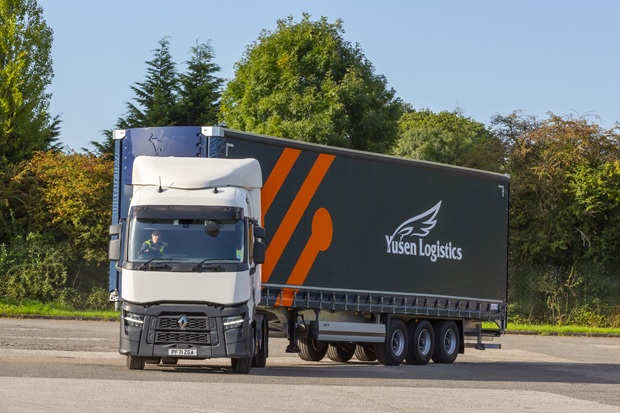 At Yusen Logistics, we believe the supply chains performing best today share three common traits: visibility, agility and strong partnerships.
Visibility Drives Better Decisions
In a fast-moving market, the ability to see what’s happening across the supply chain in real time has become a competitive advantage.
Without accurate data on inventory, transport and warehouse operations, businesses risk stock shortages, excess inventory and missed sales opportunities. By combining warehouse management systems, transport visibility and predictive analytics, organisations can move from reacting to issues to anticipating them.
For retailers and manufacturers alike, better visibility means faster decisions, improved customer service and more efficient use of inventory.
Agility Has Become Essential
Traditionally, supply chains were designed primarily for efficiency. Today, they must be designed for resilience too.
Retailers need to respond quickly to seasonal peaks, promotional activity and changing consumer behaviour. FMCG brands must balance product availability with cost control and increasingly complex demand forecasts.
At Yusen Logistics, we’ve seen first-hand how flexibility can transform performance. Working with a major retailer, we developed a scalable warehousing and fulfilment solution capable of adapting to significant volume increases during peak trading periods. Through enhanced inventory visibility, operational planning and flexible resourcing, the business maintained service levels while meeting increased customer demand.
The lesson is clear: resilience is not built during disruption. It is built before disruption occurs.
Sustainability and Efficiency Go Hand in Hand
Sustainability remains a strategic priority across the retail and FMCG sectors, but the most successful organisations are integrating environmental goals into wider supply chain strategies rather than treating them as standalone initiatives.
Many actions that improve sustainability also improve operational performance. Better route planning reduces fuel consumption, improved inventory management minimises waste, and efficient warehouse operations lower both energy use and operating costs.
When approached strategically, sustainability becomes a driver of efficiency rather than a cost.
Investing in People Remains Critical
While technology continues to transform logistics, people remain at the centre of supply chain success.
Automation, AI and advanced analytics are creating new opportunities, but businesses still need skilled professionals who can interpret data, manage complex operations and respond to changing market conditions.
This is why Yusen Logistics continues to invest in workforce development and apprenticeships. As supply chains become increasingly digital, developing future talent is just as important as investing in infrastructure.
We have also seen the wider benefits of supporting skills across the supply chain ecosystem. Through apprenticeship levy transfers and industry partnerships, businesses can help address skills shortages, strengthen local communities and create a more sustainable talent pipeline for the future.
Looking Ahead
Uncertainty is likely to remain a defining feature of modern supply chains. Economic pressures, evolving consumer expectations and rapid technological advancement will continue to challenge retailers and manufacturers.
The organisations that succeed will be those that view their supply chain as a strategic asset rather than simply a cost centre.
At Yusen Logistics, we believe the future belongs to businesses that combine technology, operational excellence and skilled people to create agile, resilient supply chains. Because in today’s market, success is not defined by how efficiently you operate when conditions are stable, but by how effectively you adapt when they change.
Comments are closed.