



Many warehouses have thousands of square metres of roof space, and they also use a high volume of electricity during the day. Installing solar PV on the roof can turn unused space into a source of renewable electricity, helping to reduce the building’s carbon footprint and energy costs.
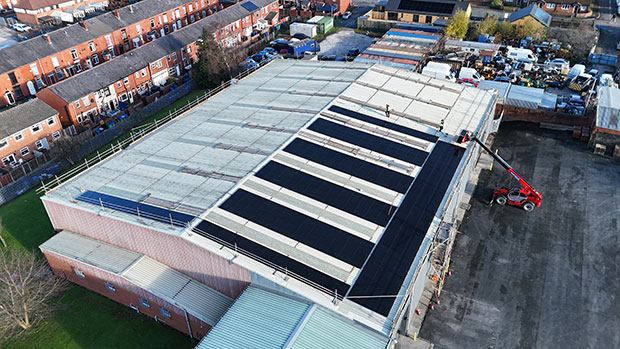
Gaia Energy, a specialist in commercial solar design and installation, is seeing growing interest from businesses exploring solar to help manage their energy costs and cut their carbon emissions.
The company recently installed a 160kW solar PV system for Heywood Pool and Snooker, a Lancashire-based pool and snooker table manufacturer that exports worldwide. Based on the site’s electricity consumption, the system is expected to generate around 180,000 kWh of electricity every year, saving an estimated 77,511 kg of CO? annually. The installation is expected to reduce the business’s energy costs by 35%, with an estimated payback period of three years and one month.
Like many manufacturing and distribution sites, Heywood Pool and Snooker is a busy industrial operation with a large roof and significant electricity use during working hours.
Lower energy costs are a huge benefit of commercial solar, but it’s not the only driver. Businesses are being asked more about sustainability, whether through customer questionnaires, tender requirements or supplier reporting, and many are working to their own targets as well. Generating electricity on site cuts the amount they buy from the grid and gives them a measurable reduction to report.
The financial case for solar depends heavily on how much of the electricity generated can be used on site. Warehouses and logistics operations often have significant electricity demand for lighting, conveyors, automated systems and other material handling equipment, so solar generation can make good business sense.
“Commercial solar needs to be designed around the individual site rather than simply the amount of roof space available,” explains Liam Gray, Managing Director at Gaia Energy. “We look at how a business uses electricity, when that demand occurs and what the roof can realistically generate. This gives the customer a much clearer picture of what the system can deliver and the potential return on the investment.”
However, there are practical factors to consider before committing to an installation, such as ownership and lease terms. Many operators lease their buildings, so landlord consent, the length of the lease and who benefits from the savings all need to be agreed early.
Roof condition and structural suitability need to be assessed, including whether any repair work is needed before installation. Grid connection requirements can affect timescales and cost, particularly for sites planning to add electric vehicle or forklift charging.
Battery storage is another option for sites with demand outside daylight hours. It can store surplus daytime generation for use later, which may suit operations running early mornings, evenings or night shifts. However, storage adds to the upfront cost, so whether it makes financial sense depends on how much surplus electricity a site would otherwise export and when its demand peaks.
Warehouse and logistics operators considering solar should start by working out how much of the electricity generated they could use on site. The more of it they use, the greater the potential reduction in both energy bills and carbon emissions, strengthening the case for putting the building’s roof to work.
For more information about commercial solar design and installation, visit gaiaenergy.co.uk or email info@gaiaenergy.co.uk to arrange an energy efficiency assessment.
Comments are closed.