



Finmile Autonomy works across existing systems to investigate problems, contact the people involved and follow work through to completion.
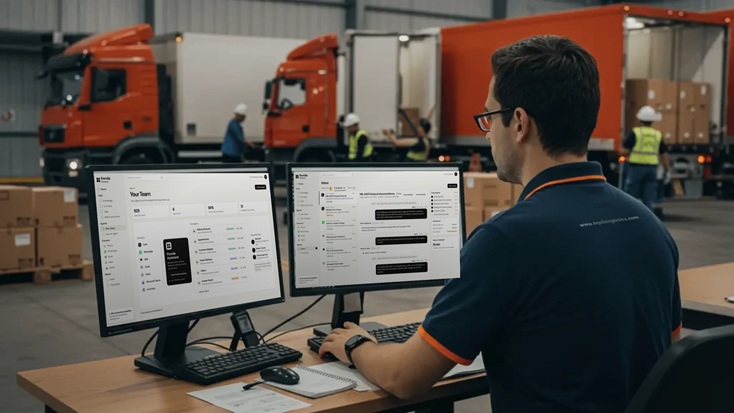 Finmile is helping warehouse and logistics businesses automate the operational follow-up that consumes their teams’ time, with AI agents that manage tasks from delivery recovery and appointment coordination to claims investigation and invoice reconciliation.
Finmile Autonomy connects to the systems a business already uses. Its AI agents gather information, communicate with drivers, warehouses, carriers and customers, take action within agreed permissions and monitor whether the job has been completed.
The technology was shaped by Finmile’s experience running its own operation handling 55,000 parcels a day. Even after building Finmile OS, its operating platform, the company found that teams still spent substantial time making calls, chasing responses and moving information between systems.
Rich Pleeth, co-founder and CEO of Finmile, said: “Most operations teams know exactly where the time goes. A delivery runs late, someone calls the driver, someone else speaks to the warehouse, the customer needs an update and every system needs changing. Then somebody has to check it actually happened.
“We built Finmile Autonomy to take responsibility for that work. It investigates the problem, contacts the people involved and follows through, with clear limits on what it can decide and when it needs a person.”
For a delayed delivery, a configured AI agent can check the circumstances, contact the relevant parties, coordinate a revised booking and update connected systems. It continues monitoring the delivery and escalates if further intervention is needed.
The same approach applies to other recurring tasks, including chasing missing proof of delivery, gathering documents for a claim, progressing unanswered customer enquiries and investigating disputed charges.
Businesses retain control over each agents’s authority. Routine requests and approved updates can be handled automatically, while additional spending or commitments outside policy require approval. Actions are recorded, and cases are escalated when evidence conflicts or the agent lacks authority to proceed.
Finmile’s deployment approach starts with 1 workflow, a defined outcome and agreed permissions. Teams can initially review proposed actions, move to supervised execution and expand autonomy as performance is demonstrated.
Pleeth added: “You should be able to introduce AI without replacing the systems your operation depends on. Start with 1 job your team keeps having to chase, agree what the agent is allowed to do and measure the result.
“The opportunity is to give experienced operations people more time for the decisions that need them, while routine work keeps moving.”
Finmile is inviting warehouse operators, logistics providers and transport businesses to bring a recurring operational problem to a tailored demonstration of Finmile Autonomy.
To arrange a demonstration, contact hello@finmile.co or visit finmile.co.
Comments are closed.