




Warehouse and Distribution (WD) operations perform best when inventory and sortation systems match today’s needs while remaining flexible for tomorrow.
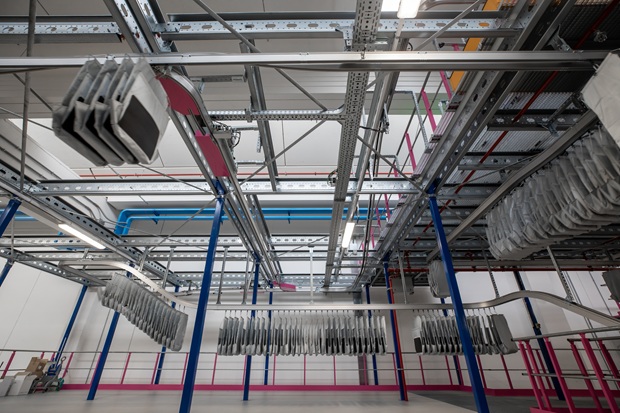 Solutions are often selected to optimise either inventory handling or sortation. But many WD centres need both—fast storage/retrieval plus efficient buffering, sequencing and shipping preparation. Here’s how shuttle and pouch systems compare, and why pouch technology can be the practical middle ground.
Shuttle systems: strong inventory engine, limited sortation
In inventory-focused warehouses, automated shuttle-based goods-to-person (GTP) systems are common. They are modular and scalable, and excel at receiving, storing and retrieving goods—making them a reliable inventory engine or buffer.
- Inventory engine / buffer
- Pick/throughput engine (design-dependent)
- Basic sortation/shuffling of on-hand inventory
- Handles a defined SKU size/weight range
Because most capacity is dedicated to storage and retrieval, shuttle systems can become less attractive when an operation needs an inventory buffer and medium-to-heavy sortation, sequencing or shipping buffers. That’s where pouch systems fit.
Pouch systems: the flexible middle ground
For fulfilment centres that need both buffering and fast sortation (not just pure storage or pure sortation), a pouch system can deliver a strong balance of capabilities.
Typical strengths include:
- Temporary inventory / fulfilment buffer
- Medium-to-high speed sortation
- Handles many SKU shapes up to 7 kg (15.4 lbs)
- Modular and highly scalable with minimal disruption
- Can be ceiling-mounted to use vertical space
Compared with a shuttle-based GTP, a pouch system typically offers less long-term storage capacity but higher sortation speed and far more flexibility for buffering, order consolidation, sequencing, and even returns handling—especially when you want one multi-purpose system rather than multiple point solutions.
Case example: pouch as a consolidation buffer alongside GTP
Consider an omnichannel fulfilment operation using a GTP system as the primary inventory and picking engine, but needing a ship buffer that can also consolidate multi-line orders and release items in the right sequence. Instead of keeping cartons open while waiting for late-arriving lines, picked items are placed into pouches and “parked” until all order lines are ready. When complete, the system sequences and releases the order for packing and shipping—adding sortation and sequencing performance without replacing the GTP inventory backbone.
Sequencing, control and digitalisation
Sequencing becomes critical at scale—for example, ensuring fragile items are packed last across thousands of daily orders. A pouch buffer lets you hold, sort and release items in the required order while maintaining traceability. When integrated with a warehouse management or control system (WMS/WCS), the operation gains a digital footprint of inventory and work-in-progress, enabling tracking, control and faster corrective actions that improve throughput and reliability.
Takeaway
Shuttle (GTP) systems are excellent for large-scale inventory storage and high-performance picking, but they are not always the best answer when operations also require substantial buffering, sequencing and sortation close to shipping.
Pouch systems sit in the middle: fast, modular sortation combined with a practical short-term inventory and consolidation buffer, with options like ceiling mounting to use vertical space. Used alone or as a complement to GTP, pouch technology helps WD centres build a more adaptable, future-ready flow from picking to packing to dispatch.
Discover more here:
Comments are closed.