



For fertiliser merchants, buying urea early can take some of the risk out of a market where demand is concentrated into a relatively short application window – but securing the product is only part of the challenge. Once it arrives in the UK, it needs to be stored somewhere that can maintain its good condition and move it efficiently when demand picks up.
British fertiliser application follows a tight seasonal pattern, with the main urea spread taking place in February and March, with further applications through April and May.
Urea is the most concentrated solid nitrogen fertiliser on the market, and for arable farmers there’s no easy substitute. A merchant who misses the window can’t simply switch product or wait for the next delivery.
With a large share of the year’s demand packed into a few weeks, it leaves little room for shipments that arrive late. The safest move is to get the product in early, but the trickier question is where to keep it.
Part of this change in trade patterns comes down to the supply map. With UK production largely gone, importers source more product from Algeria, Egypt and, increasingly, Nigeria, where Dangote’s plant near Lagos has grown into one of the world’s largest exporters. Russia, once a major supplier, has fallen back sharply since 2022 and faces UK import duties climbing to 35% from July 2027.
New routes are longer, and a lengthier supply line increases risk. When conflict flared around the Strait of Hormuz earlier this year, for example, urea prices jumped and buyers scrambled for alternative cargoes, since a significant share of the world’s seaborne fertiliser normally moves through that single strait. A cargo booked for March that arrives in May is no use in a tight seasonal window, and being caught short at the peak is far more costly than storing early.
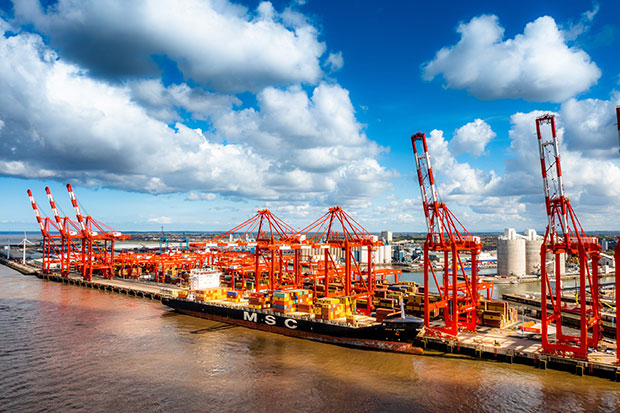
Buying early only works, though, if you have somewhere to put the product. This is where ports play a vital role; the ideal port partner provides deep water next to quality storage. Urea is hygroscopic, so it needs covered storage that keeps it dry across months, not days or weeks. Larger vessels from the new countries of source need the draught to berth fully laden. A port that offers both allows a merchant to land a big cargo early and hold it in pristine condition until the field is ready.
King George V Dock in Glasgow and the Port of Liverpool are built for this, taking Panamax vessels of up to 65,000 tonnes. This capability means a merchant can land a season’s volume in fewer, larger cargoes. Furthermore, Liverpool holds it in around 900,000 sq. ft. of covered, traceable warehousing close to merchant’s sites.
King George V Dock adds another lever, as its bonded warehousing lets importers defer duty and VAT until products leave the store, easing the capital hit of holding volume for weeks or months before it sells. When working with thousands of tonnes annually, this keeps real money in the business rather than tied to a quay.
“Merchants are securing their urea earlier every season, and these who plan ahead need somewhere to hold it,” said David Huck, Chief Operating Officer at Peel Ports Group.
“A combination of deep water and quality storage takes real risk out of a long supply chain, and at the King George V Dock, the bonded option lets importers hold stock without duty and VAT tied up until they’re ready to sell.”
Merchants planning for the season ahead can find out what storage King George V Dock and the Port of Liverpool offer here. Find out more about the facilities and options available at King George V Dock and the Port of Liverpool: www.peelports.com/alexandra-complex-warehousing
Comments are closed.