



Food processing operations must keep products moving efficiently while maintaining strict quality standards, managing costs, reducing waste, and protecting employees in intensive environments. From raw ingredient intake to production, cold storage, and final distribution, lift trucks and warehouse equipment play a critical role at almost every stage.
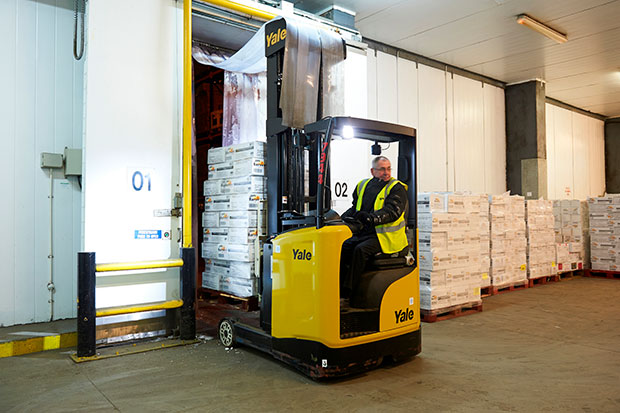
To tackle operational changes, many facilities are exploring how integrated technologies can also play a valuable part in helping create connected, responsive, and efficient operations. Lift trucks, pallet trucks, and other warehouse equipment have the potential to generate valuable operational data and may serve as a vital link between production, storage, and distribution processes.
For food processing sites, this is particularly important. A delay in moving ingredients to production lines, inefficiencies in cold stores, or product damage during handling can have consequences far beyond warehouse efficiency.
Unlike many warehouse environments, food processing operations must also manage challenges such as temperature-sensitive products, time-critical production schedules, and the need to minimise spoilage. As a result, materials handling performance can play an important role in supporting wider operational objectives.
Few materials handling environments in food processing are as severe as cold storage. Equipment reliability becomes particularly important in these temperature-controlled environments, as unplanned downtime can have a direct impact on efficiency and operational continuity. This is where integrated technologies can add value.
For example, telemetry systems can provide insight into truck utilisation, helping managers identify underused assets, monitor operating patterns, and support proactive maintenance planning. Rather than reacting to issues after they occur, operations can use data to identify trends and make adjustments before they affect productivity.
Similarly, operator assistance technologies like lights and sensors can support drivers working in challenging visibility conditions or busy storage areas, helping promote consistent forklift operation.
Food processing facilities often operate multiple truck types across different applications, including loading bays, production support areas, cold storage facilities, and finished goods warehouses. Better visibility into fleet activity assist managers in identifying operational bottlenecks, improve equipment utilisation, support maintenance planning, and make more informed decisions about fleet investment.
Integrated telemetry solutions can also help provide a clearer picture. By monitoring factors such as usage hours, impacts, idle time, and maintenance requirements. This information can be particularly valuable during periods of fluctuating demand, allowing operations to optimise fleet deployment and potentially avoid unnecessary equipment costs. It is easy to assume “we need more trucks” but the data may reveal that the fleet is sufficient, and there is equipment spending large parts of a shift idle.
Just as importantly, operational data helps food processing facilities make improvements based on facts, not guesswork. A supervisor might say that the cold store is causing excessive downtime. However, the data might show that most downtime stems from impacts and operator-related issues.
In food processing operations, this level of insight may also help identify opportunities to improve workflow efficiency between warehouse, storage, and production areas, supporting smoother product movement. Product damage during materials handling can also contribute to unnecessary waste. By providing greater visibility into impacts, handling practices, and fleet performance, connected technologies offer insight into opportunities to reduce product losses and improve operational efficiency.
Busy environments, shift work, and demanding schedules can create challenges that affect consistency and efficiency. Operator assistance technologies may support performance by improving awareness of surrounding activity, encouraging consistent driving, and providing additional support in challenging work areas.
Food processing operations often comprise an element of indoor handling, and parts, if not all, of the operation must take place in a clean environment. This makes electric forklifts often the go-to choice. However, battery chemistry and performance can be a consideration.
In cold storage applications particularly, power performance can have a direct effect on operational continuity and productivity. Here, low temperatures can affect the efficiency of some battery types, making energy management a key operational priority.
Advances in battery technology are helping address these challenges. Lithium-ion solutions, for example, can offer opportunities for fast, opportunity charging and greater operational flexibility, while eliminating some of the maintenance requirements associated with traditional lead-acid battery technologies.
When paired with fleet management data, businesses can make more informed decisions about battery charging strategies, asset utilisation, and energy consumption, supporting efficiency throughout the operation. While individual technologies can deliver benefits in specific areas, greater value may be realised when equipment, power solutions, operator assistance systems, and data insights work together as part of a connected materials handling strategy.
Comments are closed.