



If racking failed in your warehouse, who would be responsible?
That’s the question SEMA, the Storage Equipment Manufacturer’s Association, is putting to the logistics industry.
In any warehouse, racking suppliers, installers and inspectors are hired to get racking in place and ensure it meets industry standards. Many assume this is enough to ensure they meet HSE obligations. It isn’t. If something goes wrong, as the warehouse owner, director or manager, you are held accountable.
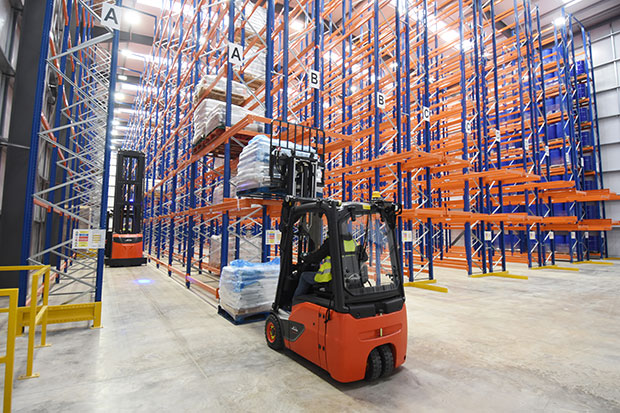
When racking goes wrong
Picture the scene: for years your racking has worked fine, until one day it fails. Stock is lost, operations stop and worse, an employee is seriously hurt.
Then the Health & Safety Executive (HSE) investigates your inspection reports. This tells them how often inspections were conducted, if load notices are in place and whether damage was flagged.
The problem is, when damage was picked up the issue was not repaired. Instead the report was ignored.
Now the actions of warehouse management are under scrutiny. Were external partners’ credentials checked? Were Visual and Expert Inspections carried out and reports prepared? Did you have a process in place for repairing damage within the required timescales?
If you failed in any of these steps you could be liable resulting in reputational damage, hefty fines and even a prison sentence.
Know the regulations
Racking is classed as work equipment and under the Health and Safety at Work Act and Provision and Use of Work Equipment Regulations (PUWER), it must be maintained in a safe condition.
However, given the extreme loads storage equipment carries, there are two further pieces of guidance which provide further detail. HSG76 Warehousing and Storage: A Guide to Health and Safety by the HSE, and SEMA Codes cover the design, installation, use and maintenance of storage equipment. Neither of these documents are a legal requirement but, if something does go wrong and the HSE investigates, both are used as a framework to bring action against a business.
Knowing the regulations is step one, implementing them correctly protects your business.
The basics
Everything starts with your employees. Anyone working in areas with racking should be trained in how to work safely and know who to report to if they find damage to the structure.
Racking is designed to carry a maximum weight and overloading the structure will weaken it. To avoid this happening, there must be a Load Notice fixed to the structure which informs on the maximum weight and number of pallets that can be placed on the beams. The Load Notice is specific to the design of your racking and should be provided by the supplier.
Check Load Notices are clearly visible and ensure employees are trained on how to read the signage.
Inspections
The more damage racking carries, the weaker it gets, and the higher the chance of it failing. Identifying damage through inspections and fixing it within specified timeframes reduces this risk.
This starts by appointing a member of your team as the Person Responsible for Racking Safety (PRRS). They are responsible for conducting Visual Inspections (approximately once a week) which checks for racking damage, that load notices are present and correct loading is followed.
This is supported with an Expert Inspection at least once a year by a qualified professional such as a SEMA Approved Racking Inspector (SARI). This inspection goes deeper by checking the structural stability of your racking, compatibility with surrounding equipment and confirms correct loading practices are followed.
Both inspections should produce a report which categorises damage using a colour-coded system – green, amber and red.
The report is where it counts
This is where many warehouses fail. The inspection findings should trigger a process with a qualified installer, who undertakes repairs within a required timeframe. You also need to check that the person undertaking the repairs is approved by the manufacturer or it could invalidate the warranty. For example, some SEMA Approved Manufacturers authorise SEMA Approved Members to carry out repair work on their behalf. Keep a clear record of all repair work and who carried it out. If the HSE comes calling, that paper trail is your strongest defence.
Safety starts at the top
Inspections, trained suppliers and employees all play a part in keeping the warehouse safe – but none of that works without leadership setting the tone. Senior management teams need to know their responsibilities, the correct processes to follow and then instil a culture of safety.
Failing to meet the required standards and following the correct processes is where it all goes wrong.
To help senior management teams understand their requirements, SEMA has launched a new Racking Duty Holders Course. The two-hour online course covers why racking safety can’t be delegated, the role of the PRRS and racking compliance.
For more information, head to sema.org.uk/racking-duty-holders-course.
Comments are closed.