



Yale expert Ron Farr, Head of Dealer Warehouse Sales & VNA, EMEA, explores the key trends affecting beverage warehousing today, and how the latest forklift technologies are helping.
What beverage warehouse trends are having an impact on lift truck operations?
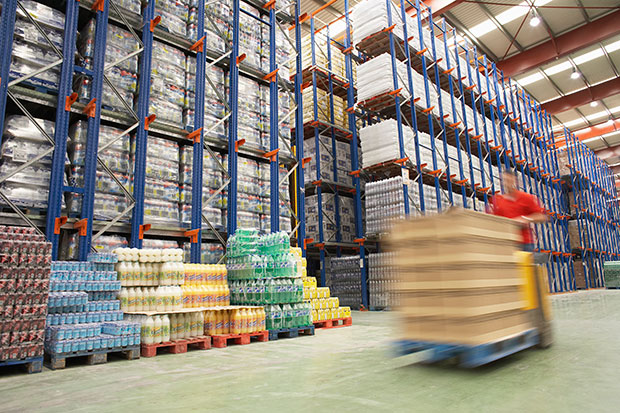
As consumers seek more variety, operations have been forced to store and move more SKUs than in the past. Not only are more SKUs being stored on a daily basis, but customers expect that larger selection to consistently be in stock at stores. This has created a shift towards smaller, more frequent deliveries, putting more pressure on warehouses to quickly deliver orders. It also drives demand for lift trucks that can handle the delivery of mixed loads while maintaining agility and efficiency.
Yale lift trucks and associated technologies are designed to increase efficiency, whether that be through greater manoeuvrability, more consistent power delivery, fast charging times, or increased operator awareness of nearby objects and pedestrians.
How have labour challenges impacted the use of forklifts?
The ability to find and retain qualified lift truck operators is a challenge. One consequence is that operations may hire less experienced operators and use higher numbers of agency staff. This may create incident risks. Responsible employers must observe local guidance on conversion and refresher training, as well as bringing operators up to speed on the latest best practices, site-specific rules, particular equipment, and more. Yale is heavily focused on developing technologies that can help reinforce safe operating practices and help workers get up to speed in fast-paced operations as quickly as possible.
For example, many Yale lift trucks and warehouse equipment types can be configured with operator assist systems, such as the Yale Reliant pedestrian awareness camera. This can accurately identify pedestrians at ranges up to 5 metres, through a 110-degree field of view, and provide automatic alerts to the operator when a pedestrian is detected. Operations can get the camera system with audible and visual alerts only, with a voiceover communicating pedestrian proximity, and a light indicating which zone the pedestrian is in on the truck-mounted operator remote. They can also go a step further with optional traction alerts that automatically and gradually slow down the lift truck. Users of the pedestrian awareness camera and the highest tier of Yale Vision telemetry can also access a pedestrian detection event dashboard at no additional cost.
What safety measures are being introduced?
Warehouse safety is a critical issue that necessitates operations to be properly trained and, if relevant to the specific application, armed with technologies that can help reinforce best safety practices. But it’s important to note that safety isn’t an outcome, it’s a culture. Safety is everyone’s job and must extend across operations and the supply chain.
Aside from the operator assist systems I’ve discussed earlier, technology can be leveraged to support safety in other ways, too. Telemetry systems, for instance, make critical maintenance data accessible while also providing alerts and fault codes related to hazardous driving behaviours, such as excessive speed or impacts. Access to this kind of data grants operations the ability to remediate problem areas and reinforce best practices.
Comments are closed.