



Many warehouse activities sit between traditional access methods, such as ladders or steps, and dedicated order-picking equipment. These are typically low-frequency, light-duty tasks that still require a practical approach to working at height.
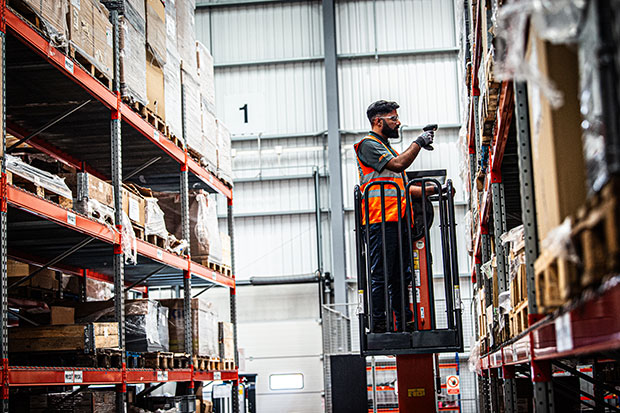
JLG Power Towers is providing guidance on how warehouse teams can approach these tasks by selecting equipment that is appropriate for the application and following established work at height procedures. The Challenge of Low-Frequency Picking Tasks
Low-frequency picking often sits in an operational grey area. It typically involves accessing items stored above ground level, retrieving individual products rather than full loads, and carrying out tasks that only arise occasionally.
Because these tasks are often perceived as quick or routine, warehouse operatives may use whatever equipment is most readily available rather than selecting equipment that best suits the application. This can increase the potential for inappropriate work at height practices, introduce unnecessary risk and create operational inefficiencies through additional set-up time or unnecessary movement when handling items at height.
A Growing Focus on Task-Appropriate Equipment
There is increasing attention on selecting equipment that is appropriate for the task, helping organisations support low-frequency work at height activities without adding unnecessary complexity.
Following discussions with retail warehouse operators and material handling specialists, JLG Power Towers developed a simple stock picking tray compatible with the Pecolift and Ecolift manual lifts to support these low-frequency picking applications.
“What we’re seeing in warehouse environments is a real need for something that supports those smaller, low-frequency picking tasks,” says Sam Butterworth, Business Development Manager UK & I – Low-Level Access at JLG Power Towers.
“Often, it’s a case of retrieving a single box or a few individual items, where a ladder may traditionally be used. This accessory provides an alternative approach for those applications.”
The tray provides a dedicated surface for holding small items or individual boxes while working at height. By keeping items within easy reach, it supports handling during low-frequency picking tasks and may reduce the need for operators to carry items while repositioning. It is a simple addition that reflects how these activities are commonly carried out within warehouse environments.
Making Better Use of Existing Equipment
One of the key considerations is how these solutions fit into existing warehouse operations. In many facilities, manual push-around lifts are already used across multiple departments for a variety of maintenance and access tasks.
By introducing a simple accessory, organisations can adapt equipment already in service to support low-frequency stock picking applications, allowing greater flexibility without introducing dedicated equipment for infrequent tasks. This approach enables businesses to make broader use of existing equipment while supporting different operators and applications across the site.
Supporting Good Work at Height Practices
“Low-frequency tasks deserve the same level of planning as everyday operations,” says Sam.
“Even infrequent work at height activities should be approached using equipment that is appropriate for the task alongside established site procedures. Providing a stable working platform together with a practical way to manage small items can support work at height activities and everyday warehouse operations.”
As warehouse operations continue to focus on efficiency and selecting equipment that is appropriate for the task, simple solutions that support low-frequency picking activities can help organisations adapt existing equipment to meet a wider range of operational requirements.
To learn more about the JLG Power Towers range, visit powertowers.com.
Comments are closed.