



Focus on reducing materials handling equipment fuel emissions is intensifying. Sometimes to meet corporate environmental objectives and often hastened by local emissions standards and regulations.
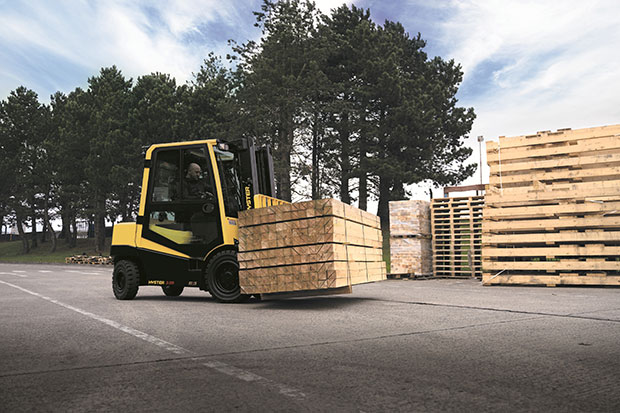
For tough industrial materials handling applications, where diesel fuel has been the go-to fuel source for decades, this presents challenges. Achieving zero emissions operations may be the end goal. However, what is now clear is that there are options that are available right now for businesses keen to reduce their truck emissions as part of the journey to greener operations. Hyster explains one such solution – HVO 100 – and how it can benefit rental fleets.
HVO 100 is a bio-based, renewable, liquid fuel diesel alternative that meets the standard EN15940 for paraffinic fuels. According to BioFuel Express, HVO is reported to help eliminate up to 90% of greenhouse gas emissions (such as CO2). This fuel type makes it possible to significantly reduce overall emissions from trucks previously using diesel, while limiting impact on performance.
An increasing number of industrial trucks are available that can be fuelled by HVO from new. Trucks already in the field can also be converted easily to accommodate HVO fuel. Switching to HVO fuel is therefore a realistic option for reducing emissions across an entire fleet straight away. For example, HVO-compatible lift trucks from Hyster are available with capacities from 2 tonnes to 52 tonnes, either as standard or with minor seal replacements, depending on the engine manufacturer.
As it is a less widespread fuel type, the cost of HVO is generally a little higher than diesel. Fuel consumption may be greater too. That said, compared to the cost of transitioning to an electric fleet, HVO is an affordable and easily adopted solution to immediately support your company’s journey to lower emissions.
HVO also gives businesses fuel flexibility. Many diesel trucks are already compatible with HVO 100 fuel and do not require any modifications beyond filling the tank with a renewable, lower net emission fuel. For outdoor applications where cold climates may be encountered, HVO fuel can also withstand temperatures as low as -34 degrees C.
For organisations focused on sustainability, HVO fuel not only brings benefits around carbon emissions, but is also fossil free and created from renewable sources. It is also biodegradable and can be absorbed by the ground without damage to the immediate environment. This helps applications that are currently using diesel fuel to clean up operations further. There is also no strong fuel smell from burning HVO, which also contributes to a comfortable environment for operators too.
Some applications may use trucks at 2-3.5 tonne capacities for fewer hours or less, intensively, and often for outdoor operations. At this capacity, HVO is also an effective and affordable alternative to diesel. The right power source will always depend on the specific application. However, HVO can provide a useful stop gap to start reducing emissions in the short term, while plans can be made and capital raised for future transitions to electric power.
Comments are closed.