


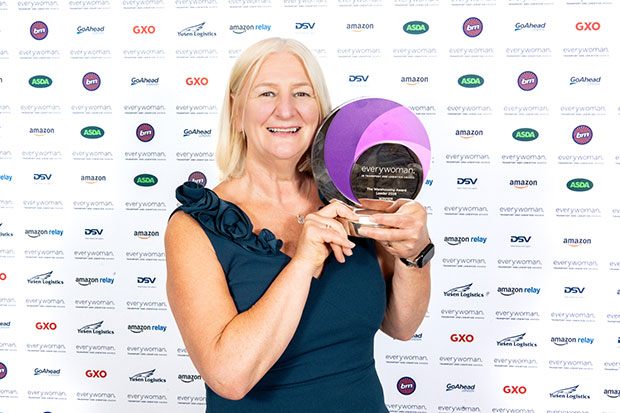
Brenda Sunley won the ‘Leader’ award in the Warehousing category, sponsored by B&M, at this year’s everywoman in Transport & Logistics Awards, run in association with DSV and Amazon Relay. Brenda is Managing Director of Storage & Fulfilment Services Ltd and we caught up with her to find out more.
Please, can you share some background about your career? When did you first get into the logistics industry and what led to you starting in it?
I came into logistics by accident rather than by design. Like many people in our industry, I didn’t grow up thinking I wanted a career in warehousing and logistics, but once I joined the sector, I quickly realised how varied, fast-paced and rewarding it could be.
Throughout my career I’ve worked across sales, operational, commercial and strategic roles, which has given me a broad understanding of what customers need and how businesses can use logistics as a competitive advantage.
Have you seen any significant changes from your first days in the industry versus now in terms of women in leadership roles and female interest in the sector?
When I first entered the industry there were very few women in senior operational or leadership positions, and it wasn’t unusual to be the only woman in the room.
That has changed significantly. We’re now seeing far more women leading warehouses, supply chains and logistics businesses, and industry initiatives such as the everywoman Awards are helping to showcase successful female role models who inspire others.
There’s still work to do, particularly in attracting women into operational roles and ensuring leadership pathways are visible.
Why do you think it is so important to encourage more women into the logistics industry?
Logistics touches almost every part of our daily lives, yet many people still don’t fully understand the breadth of careers available within it.
We need to attract the best talent regardless of gender. Women bring different perspectives, leadership styles and problem-solving approaches that strengthen businesses and improve decision-making.
How do you think more women can be brought into leadership roles in the logistics industry?
The key is creating an environment where people are trusted, supported and given opportunities to grow.
Businesses also need to actively invest in mentoring, development and succession planning. When organisations provide that support, more women naturally progress into leadership positions.
More generally, what do you think are the main challenges facing the UK’s logistics sector?
The logistics sector continues to face a number of significant challenges, including rising operating costs, recruitment and retention, increasing customer expectations and ongoing economic uncertainty.
Technology will play a major role in addressing these challenges, but it’s important that businesses see technology as something that enhances people rather than replaces them.
What makes you optimistic about the UK logistics sector?
Logistics has always been incredibly resilient. I’m particularly optimistic about the pace of innovation. Artificial intelligence, warehouse management systems, automation and data analytics are creating opportunities to deliver better service and improve efficiency without losing the personal relationships that customers value.
I’m also encouraged by the people entering the industry. We’re seeing more diverse talent, fresh ideas and a growing recognition that logistics offers long-term careers with real opportunities to make a difference.
Winning the everywoman Leader Award was an incredible honour, but for me it also represents the progress our industry is making. The future of logistics depends on attracting the best people.
Comments are closed.