



Efficient material handling is a critical factor for productivity in UK warehouses, workshops, and industrial facilities. Choosing the right scissor lift table can significantly improve operational efficiency, worker safety, and ergonomics. Key considerations include load capacity, lift height, platform size, and compliance with UK safety standards. With a diverse range of options available, businesses need to carefully assess their specific needs to select the most suitable lift table for their environment and tasks.
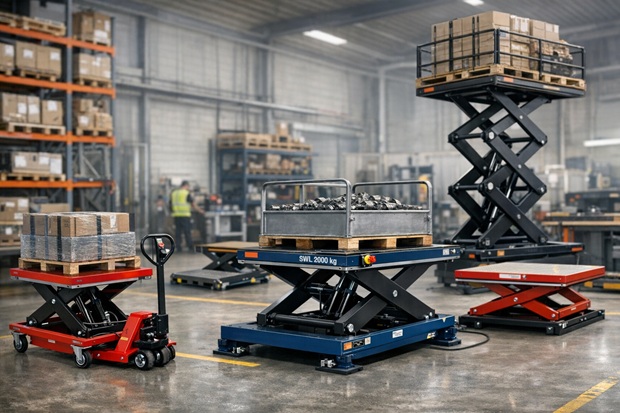 Key factors in selecting a scissor lift table
Load capacity remains the foremost criterion when selecting a scissor lift table. Models available on the market range from lightweight units supporting 100 kg to heavy-duty tables capable of lifting up to 4000 kg. For example, lighter-duty lifts with capacities between 300 and 500 kg are ideal for workshops or light industrial tasks, while heavy-duty scissor lifts serve production lines handling bulky or heavy items. It is essential to ensure the lift’s capacity matches the heaviest load expected, with weight distributed evenly across the platform.
Lift height and platform dimensions must also align with operational demands. Adjustable lift heights ranging from approximately 300 mm to nearly 2900 mm help workers maintain comfortable postures, reducing the risk of strain or injury. Platform sizes vary from compact footprints around 500 x 840 mm to larger areas exceeding 1300 x 1350 mm, allowing for versatile use across different warehouse layouts and product sizes. Additionally, the platform should fit within aisle widths and provide stable footing on uneven surfaces to support safe handling.
Operational type and mobility considerations
Scissor lift tables come in manual, electric, and battery-powered variants. Manual lifts, operated via foot pumps, are cost-effective for lighter, infrequent tasks. In contrast, electric and motorised lifts are better suited to frequent, heavy-duty use, delivering faster lift times and reducing operator fatigue. The choice depends on task frequency, power access, and whether operators need to work on the platform itself.
Mobility is another important factor. Stationary lifts are ideal for fixed workstations, while mobile scissor lifts equipped with swivel castors and brakes offer flexibility to move between work areas. This mobility is particularly advantageous in dynamic warehouse environments where tasks and layouts often change.
Ensuring compliance with uk safety standards
UK industries must adhere to stringent safety regulations for lifting equipment. Scissor lift tables must comply with the Lifting Operations and Lifting Equipment Regulations (LOLER), the Provision and Use of Work Equipment Regulations (PUWER), and the BS EN 1570 safety standard. Key safety features include:
- Entrapment prevention devices such as safety gaps and trip mechanisms
- Guard-rails and toe-guards for fall protection on lifts exceeding two metres
- Overload safeguards including emergency stop buttons and interlocking gates
- Clear Safe Working Load (SWL) markings to prevent overloading
Regular inspections by qualified personnel ensure ongoing compliance and safe operation, helping to protect workers and equipment alike.
Tailored solutions for uk industrial needs
Across the UK, scissor lift tables are invaluable in a variety of sectors, including warehouse stock handling, industrial assembly, commercial maintenance, and workshop production. Single scissor lift tables offer versatility and cost-effectiveness for light to medium-duty tasks, while double scissor tables provide greater height range for specialised applications. Low-profile static tables reduce bending during loading, enhancing ergonomics, and heavy-duty static tables support large loads up to 4000 kg for demanding warehouse operations.
For businesses seeking a comprehensive range of scissor lift tables with expert advice and prompt availability, saxlift.com offers an extensive catalogue of over 100 models, including mobile and customised solutions. Their long-standing experience and commitment to quality support UK industries in achieving safer, more efficient material handling.
Comments are closed.