


If you work in logistics, the chances are you have come across the term “Smart Warehouse”. But what does it mean, and how does it provide a powerful competitive edge?
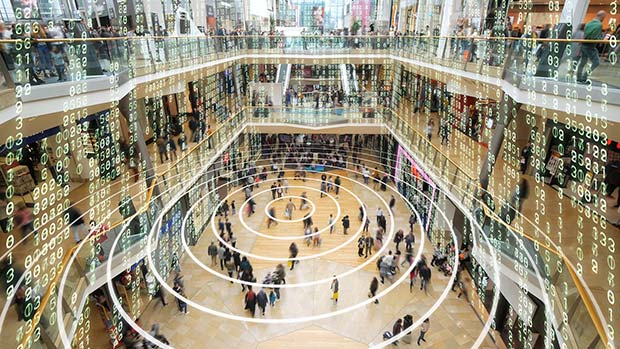 Whether we like it or not, the Smart Warehouse is here. It delivers significant advantages through its efficiency, speed, density and scalability. A Smart Warehouse is automated and connected, meaning that it is data-driven. The physical operation is integrated with the digital processes. The purpose is to cut the need for manual handling and increase the speed, quality, flexibility and efficiency of logistics processes.
Swisslog’s Head of Sales in the UK, Shane Faulkner puts it simply: “It describes the connection of all processes within a warehouse. Just like Industry 4.0 has been transferred to logistics, the Smart Warehouse is inspired by the Smart Factory,” he says.
“Pushing us to develop better solutions”
The speed of growth in the ecommerce sector has pushed new ideas and innovation forward, especially in warehouses and in last mile flows. Globally, there are many businesses doing this, Amazon is the best UK example.
These e-commerce businesses have questioned traditional methods and pushed us to develop better solutions. Above all, there is a demand for fast processes, single item picking, individualization, handling of seasonal products and extensive return flows.
E-commerce has many challenges with specific demands on logistics. A wide range of products, short product lifecycles, different order sizes, demand variations, short lead times, fast deliveries and a large amount of returns make the warehouse a business-critical function. As a result, inventory investments are not primarily driven by cost rationalization, but as an effort to meet customers’ requirements and to create value.
“A clear trend is the increasing access to data and the desire to get value from Big Data,” says Shane. “The data that can be generated using sensors, the internet and process capabilities in the cloud, combined with artificial intelligence, is a potential gold mine. It is important to process this data for decision-making.”
The future of warehousing
There are many trends in developing the warehouses of the future. For Swisslog, the clearest trends are continued automation with compact, energy efficient and data-driven warehouse solutions. For e-commerce it is particularly clear that there are fast, efficient, compact and scalable systems that apply. It goes without saying that the solutions should be computerdriven and supported by smart software.
“For us, it is important to be ready to meet the demands of e-commerce in the best possible way, both with advanced automation and the IT solutions needed,” Shane explains.
The Smart Warehouse
A “Smart Warehouse” is like a “Smart Factory”. It’s an enterprise that automates workflows using the Internet, IT-systems and sensor technology. The supporting vision for Industry 4.0 is that all “machines” in a value chain are linked and share vital information based on common standards. The human involvement in the process is almost zero. It is more about monitoring and supporting the automation.
Shane concludes: “Today’s ability to digitize supply flows down to the item-level creates the possibility of having total control over each item, order and its position in the warehouse. With the help of Big Data and self-learning algorithms, the automated system can also be optimized based on past experiences and other external factors.”
SWISSLOG
Comments are closed.