



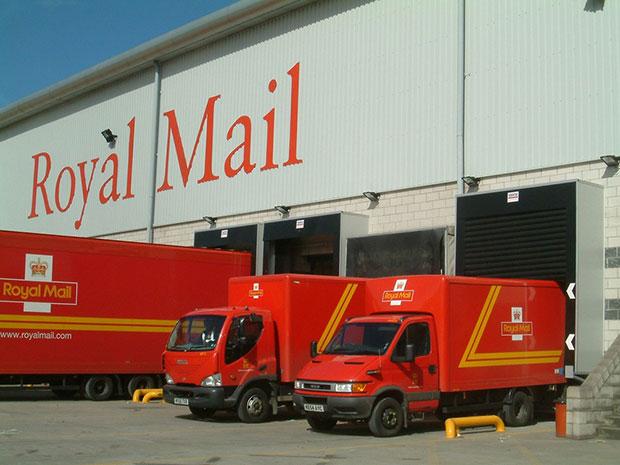
Modern warehouses and distribution centres need to be supremely efficient to ensure maximum space utilisation, accurate order picking and fast vehicle turn rounds. However, none of this would be possible if the loading and unloading of vehicles within well-equipped loading bays is not supported by the correct type of dock levellers.
 The standard for operating a dock leveller is the actual working range which, on an average leveller, is about 300mm above and 300mm below loading dock height. A dock leveller installed in a loading dock 1250mm high is suitable for loading and unloading vehicles with a deck height of 950mm to 1550mm. When, for example, a 2000mm long leveller has a working range gradient of 300mm above platform level, or exceeds the permissible range of the internal materials handling equipment, a longer leveller will be required. The max gradient identified in EN1398 should not exceed 12.5% (1:8).
Multiple leveller widths are available between 1750mm and 2250mm. It’s generally advisable to select a width as big as possible because it simplifies the placing of loads. Do not however, choose a leveller width that is too close to the internal vehicle width. If a vehicle is not parked perfectly central it could make loading/unloading difficult. Of course, the installation of wheel guides makes it easier to park straight and allows the use of the widest leveller possible.
Dock levellers were originally conceived to solve the problem of bridging the gap between the deck of a vehicle and the loading dock. Early models featured swing lips to not only achieve the necessary ‘gap bridging’ but also to overcome any height differences between the two. The swing lip design remains the most common type of dock leveller although the introduction of telescopic lip models has seen something of a revolution in the global logistics industry.
Telescopic lip levellers are electro-hydraulically operated and are controlled using push buttons to achieve raising and lowering plus the extension and retraction of the lip. In operation, the platform is raised above the height of the vehicle deck and the lip is extended. The platform is then lowered until the lip forms a bridge with the vehicle deck and the platform will follow the up and down movement of the trailer as loads are transferred. Loading/unloading can then commence.
Importantly, the extension of the lip is infinitely variable which means that the leveller can be safely used to serve vehicles that have not reversed sufficiently far enough to make contact with the dock’s bumpers. Also, if a vehicle’s position is not absolutely aligned with the dock, the telescopic lip can safely accommodate this situation without difficulty. Finally, and most importantly, the telescopic lip can allow loading of vehicles almost right up to the edge of the vehicle’s deck thereby ensuring maximum space utilisation for optimum efficiency.
It’s worth noting that the design of all quality dock levellers ensures that both the lip and platform automatically adjust to allow for the rise and fall as goods are transferred between the vehicle deck and the loading dock. All major designs of dock levellers also incorporate a number of safety features to protect against malfunction including emergency stop buttons.
Comments are closed.