



Much has been made of the disruption the warehousing sector has faced in the last year. The fundamental shift in shopping habits – the explosion in online shopping and the subsequent impact this has had on UK-wide warehousing – has forced a great many businesses to rethink their commercial strategies moving forward.
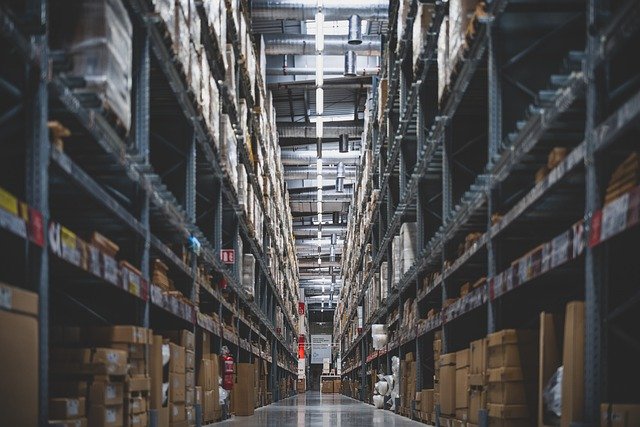
What has become apparent is the need for businesses to future-proof their enterprises. Now, this is nothing new and is certainly not limited to the logistics sector. Indeed, the medical, industrial and electronics sectors have long had systems in place to manage potential disruptions. However, what is clear is the need to leverage new and emerging technologies to optimise future processes.
But why has futureproofing emerged as one of the most pressing issues the warehousing and logistics sectors have to address? Well, as we write this in March, the UK government has laid down a clear roadmap for lifting the national lockdown in July. Of course, this is great news, however, the long-term effects that COVID-19 will have on high street and international logistics is difficult to predict.
However, looking at the evolution of consumer spending habits, wholesale changes to the warehousing sector maybe just over the horizon, with the most notable being the introduction of environmental technology.
Interested in learning what you need to do to futureproof your business? Keep reading below for all the information you need.
Navigating Panic-Buying
There’s no denying that both online and offline retailers have had to navigate the problem of panic buying, something that has created much disruption to sellers. The pressure on retailers to have available stock all year round has never been greater – and this extends beyond busy festive periods.
Knowing this, it’s paramount for retailers and their warehousing staff to create more sustainable options to manage rises in production during peak times. Decision-makers need to equip themselves to overcome future fulfilment and distribution challenges.
In March of last year, supermarkets found themselves in an unprecedented situation. To cope with consumer panic-buying they needed to find temporary warehouse space to keep shelves stocked. The sheer volume of home deliveries prompted businesses to actively seek anywhere from 50,000 square feet to 150,000. It was estimated that at the height of panic buying, established supermarkets needed to find 1 million square feet of space to cope with consumer demand… and that’s just for essential supermarket produce, like pasta, tinned goods, and toilet rolls.
This bucked a decades-long trend where customers moved away from the large weekly shop towards small convenience store shopping, forcing warehousing and logistics to adapt quickly to make sure that retail outlets had consistently stocked shelves.
Additionally, strain was placed on suppliers – and the warehousing and logistics sectors – because shopping habits and supermarket stock have evolved over time, and today are viewed as multifunctional retail outlets.
One way that the logistics sector can future-proof operations in times of panic buying is by implementing AI to predict consumer trends. Historically, logistics has been very much a reactive sector. The ability for suppliers to predict items that are likely to be in high demand early will allow them to prioritise supply, thus lorries can be proactively despatched, preventing supply chain bottlenecks, making sure that retail outlets have enough stock to cope with consumer demand at any one time.
Space Saving Solutions
At the onset of the pandemic, logistics and warehousing providers discovered that their current processes simply weren’t sustainable. The heavy increase in demand coupled with insufficient square footage made it difficult to process and send packages for delivery in the timescales customers wanted.
In the first half of 2020 alone, demand for warehouse space increased by 51%. This highlighted a short and long-term sustainability issue that had to be addressed – something that can be solved with environmental technology.
Of course, the layout and dimensions of a warehouse are integral to process efficiency, technologies like automatic channel baling presses which are used for compaction of large waste and recycling material, freeing up much-needed space.
Automatic channel baling presses can compress packing materials, such as plastic, compressing large amounts of waste into bales which can be easily recycled, promoting both sustainability, and freeing up much-needed space.
Logistics Sustainability
The pandemic, and the subsequent fallout and requisite changes that will need to be made, have highlighted that current logistics processes are not sustainable, if trends continue – which they undoubtably will, at least until nationwide lockdowns are fully lifted.
Warehouses and distribution centres have already been forced to process and package orders in increasingly smaller spatial capacities, in shorter periods of time. In the first half of 2020 alone, demand for warehouse space skyrocketed by 51%. Some in the logistics sector has reacted to this by investing looking into and investing in automated solutions.
One such solution that Amazon has already implemented is the use of Assisted Guided Vehicles (AGVs) or robots that transport inventory around a warehouse. Using sensor technology and a programmed track direction, AGVs can be locate product towers and transport products to manpower for shipping.
Yet another technological evolution that will likely become omnipresent in the logistics sector is forklift automation. Using artificial intelligence and edge computing (where data storage and communication is done locally as opposed to cloud computing) forklifts can be automated so that no human interaction is required for operation. Not only does this have the potential to greatly improve efficiency but it will also save on operational costs.
Mobile Docking Ramps
No matter what sector you work in, problems arise when you don’t have a primary and often, contingency plan to manage any disruptions. This has been highlighted across a great many sectors in the last year, with logistics and warehousing sector being no different.
Let’s look at something straightforward, though no less vital – the increased demand for small delivery van resources and warehouse docking facilities. Many environments are only equipped to accommodate docking for larger HGV vehicles. This poses a problem because of the increased volume of transit and small delivery vans employed to deliver goods across the UK.
As we’ve mentioned, shopping habits are unlikely to change anytime soon. Even after the immediate threat from COVID-19 to our health has subsided, it’s unlikely that normal high street shopping will resume to the same extent prior to the pandemic. This will likely have a knock-on effect. The more people shop online, the more likely a logistics evolution will be needed – or the more smaller delivery vans will be utilised to deliver consignments.
Mobile docking ramps with adjustable height settings will likely become a staple in warehouse facilities across the UK because they will be able to provide loading bay solutions to vans of all sizes, allowing goods of all descriptions to be loaded and unloaded with ease and safety.
These adjustable ramps make it easy for anyone to move goods from the van on a trolley, transporting them to and from warehousing environments quickly. All you need to do is to reverse or your van up the ramp to the loading dock allowing level access to the van. Businesses in the warehousing and logistics sector who want to make sure that they can cope with the increased deployment of delivery vans instead of HGVs will have to incorporate mobile docking ramps. It’s really that simple.
Smart Packaging
The significant increase in online purchasing has presented a lesser known, but no less complicated problem for online retailers – packaging. Now, it stands to reason that with more people than ever before buying goods online, suppliers will be feeling the pressure. However, there’s more to consider than just volume.
In recent years, sustainability has become a key aspect of business models. The pandemic hasn’t changed this – if anything it has accelerated decision-makers ambitions to develop smart packaging solutions.
But what is smart packaging? In short, smart packaging is packaging with enhanced functionality. Think packaging that can sense the temperature, time and ripeness of produce and retain an environment that can make sure the microbiological quality of the contents. This helps retailers to reduce wastage and ensure the quality of the contents – and extend the lifespan.
Another benefit to smart packaging is that it has the technology to sense changes in the environment which can put the contents at risk. Think anti-counterfeiting measures and the monitoring of microorganism growth.
Then there’s branding. In today’s competitive commercial market, good branding – regardless of what your business does and the sector you work in – is more important than ever. Consumer trust is paramount. Authority integral. Smart packaging allows businesses to display marketing and branding to reinforce messages and values.
Future Proofing in the Warehousing Sector is the Key to Sustained Solutions
If the pandemic has taught the warehousing and logistics sectors anything it’s the importance of futureproofing and that the sectors need to be proactive instead of reactive in their operations.
We may now have a lockdown roadmap – one that demonstrates that there’s light at the end of the tunnel – however, the effects of the pandemic are likely to be felt for years to come. By implementing technological solutions now, businesses can safeguard their operations, prompting, not only a seamless transition for when operations resume normalcy but, a clear direction in the years to come.
Comments are closed.