



As warehouses become more automated, connected, and data-driven, energy is no longer simply a consumable resource. Instead, it is becoming an operational variable that can influence productivity, materials handling fleet use, maintenance planning, and even future expansion opportunities.
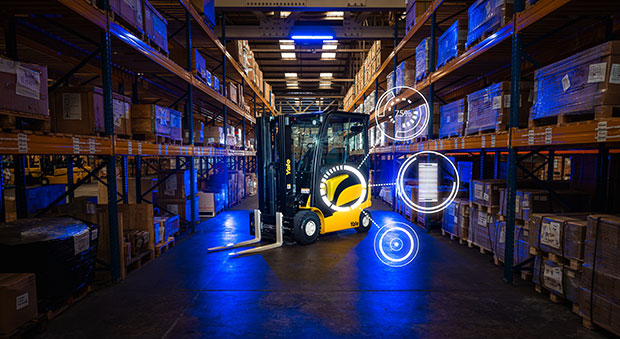
Managers are increasingly asking how warehouse fleet energy choices can support business objectives, rather than only powering materials handling equipment.
In the past, batteries operated largely in isolation. Chosen, charged, changed. And replaced at the end of their lifespan.
Today, battery systems for lift trucks are smarter. They are an integrated technology that can communicate with the machine, the charger, and fleet management or telemetry technologies, creating opportunities for a more unified approach. Yale® lithium-ion battery solutions, for example, incorporate communication between the battery, charger, and equipment to support safe operation and performance optimisation.
This integration can help create a fuller picture of how energy is being consumed across a fleet. Instead of only knowing whether a truck is running, operations can gain deeper visibility. Covering factors like energy consumption trends, charging behaviours, temperature-related events, and fleet availability.
When viewed as a whole, this data can help organisations to make smart, informed decisions about fleet deployment and future equipment investments.
Is fleet uptime becoming the real energy metric?
When it comes to power sources, the emphasis tends to be on battery chemistry, capacity, charge times, or cycle life. While these things remain important, many businesses with warehouse operations are more interested in a specific outcome: uptime.
The ability to keep lift truck and warehouse equipment fleets available when work needs to be completed can have a significant impact on productivity, labour utilisation, and service levels.
This is one reason why opportunity charging has attracted attention across many warehouse environments.
Rather than structuring operations around battery changes and dedicated charging periods, operations using fleets powered by lithium-ion batteries may be able to incorporate charging into natural pauses in workflow or breaks in the shift. This moves the focus from managing batteries themselves, to maximising equipment availability.
Why is battery data becoming operational data?
Many warehouses have spent years collecting information from lift trucks via telemetry and asset management technologies. The next evolution is for operations to understand how energy data contributes to operational decision-making.
Data relating to battery state of charge, charging activity, temperature events, and utilisation patterns can help highlight inefficiencies that might otherwise go unnoticed.
Yale Battery Vision telemetry is included with lift trucks factory fitted with Yale lithium-ion batteries. This provides information including state of charge, energy consumption, charging activity, and temperature-related events.
However, the value is not necessarily the battery data itself. It comes from understanding what that data says about workflow design, truck utilisation, and operator behaviour. Battery information becomes part of a wider strategy for continuous warehouse improvement.
As materials handling technology becomes more connected, successful operations may be those that treat energy not as a standalone asset but include forklift power solutions as part of a coordinated strategy for efficiency and long-term resilience.
Comments are closed.