



ALF Aquatic Distributors has transformed its warehouse operation and eliminated key areas of operational waste following a pilot project with Toyota Material Handling UK. By replacing traditional drive-in racking with Radioshuttle technology, the Bedford-based wholesaler has improved stock rotation, streamlined picking, made better use of its existing space and reduced operational disruption – creating additional capacity to support continued business growth without the need to relocate.
 The Challenge: Making Room for Growth
During the COVID-19 pandemic, interest in home aquatics increased significantly as more people turned to fishkeeping and pond care as hobbies. For ALF, this surge in demand created an exciting opportunity for growth. However, it also exposed limitations within the company’s existing warehouse operation.
Picking stock is labour-intensive and time-consuming, creating busy working days for employees. Valuable warehouse space was not being used as effectively as it could be. Managing stock rotation was increasingly difficult.
Searching for a Better Solution
After researching a range of storage options, the ALF team identified Radioshuttle technology as a potential solution. To explore the concept further, they approached Toyota Material Handling UK.
Working closely together, the two companies assessed ALF’s operational challenges and identified opportunities to remove waste from the warehouse.
The project was guided by the principles of the Toyota Production System (TPS), particularly the concept of muda – activities that consume time, space or resources without adding value.
The Solution: A Radioshuttle Pilot Project
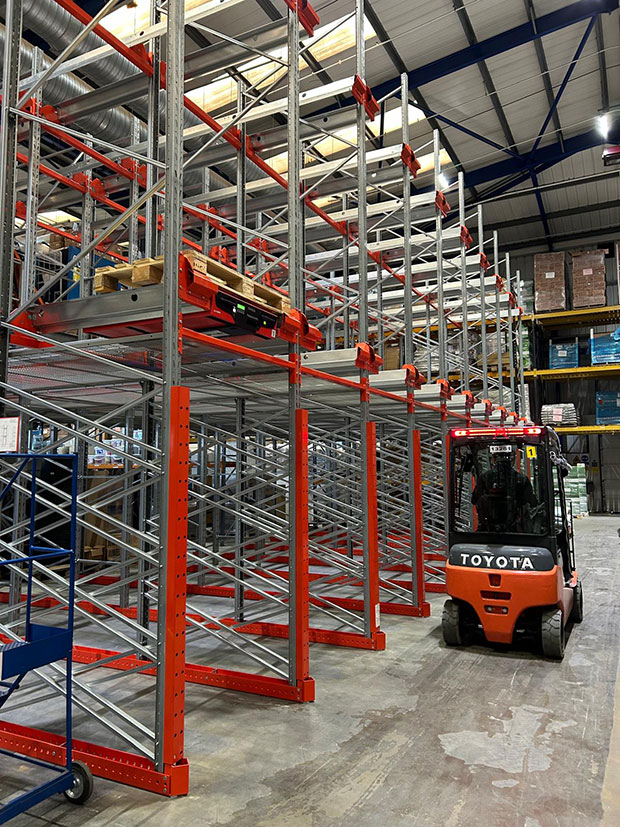
Following a detailed review of ALF’s operation, Toyota Material Handling UK recommended a pilot installation consisting of nine radioshuttle lanes.
Before the project, this section of the warehouse featured:
•Nine lanes of drive-in racking across three levels
•Manual picking processes
•Limited visibility and control over stock rotation
•Conveyor systems prone to overheating
•Time consuming access to products in the second or third levels of the racking
Toyota replaced this with:
•Nine lanes of radioshuttle racking across two levels, with the ground level being accessible via hand pallet trucks
•Automated pallet movement within the racking, allowing faster access to pallets to put away and take out
•A First-In, Last-Out (FILO) stock management system
While the number of pallet locations remained broadly the same, the new system transformed how stock was accessed, managed and replenished.
Better Stock Rotation and Less Waste
For ALF, effective stock rotation is essential. Products such as aquatic food and water treatments can lose value if they approach their expiry dates.
The new system ensures that older stock is always presented first, letting workers have better control over stock replenishment, and higher volume to be ordered by the purchasing team due to increased accessibility.
This has helped ALF reduce the risk of unnecessary write-offs and protect profit margins.
With the Radioshuttle system, pallets are automatically brought to the front of the racking, making products immediately accessible.
Rather than committing to a full warehouse redesign from the outset, ALF chose to begin with a pilot project.
This phased approach allowed the business to test the solution in a live environment, confirm the operational benefits and build confidence among the warehouse team, all while keeping risk to a minimum.
The pilot quickly demonstrated its value, and feedback from the ALF team has been overwhelmingly positive.
Looking Ahead
Following the success of the initial installation, ALF plans to continue working with Toyota Material Handling UK to introduce additional Radioshuttle and racking systems across the warehouse.
Using the principles of the Toyota Production System, the business has reduced waste, improved stock control, increased operational efficiency and freed up its team to focus on delivering excellent service to customers.
Comments are closed.