



From odours and fumes to repetitive movements, heavy vibration and loud noise, operations have their work cut out for them supporting workers in tough conditions.
When working between both indoor and outdoor spaces, having the right systems and solutions can help alleviate these day-to-day physical challenges, reduce risk of injuries or accidents, and keep operations moving. From the facilities and storage yards of building materials distributors, and manufacturers to docks and terminals, the right solutions prepare teams to reduce risk, increase comfort, and enhance productivity.
1. LIGHTING TRANSITIONS
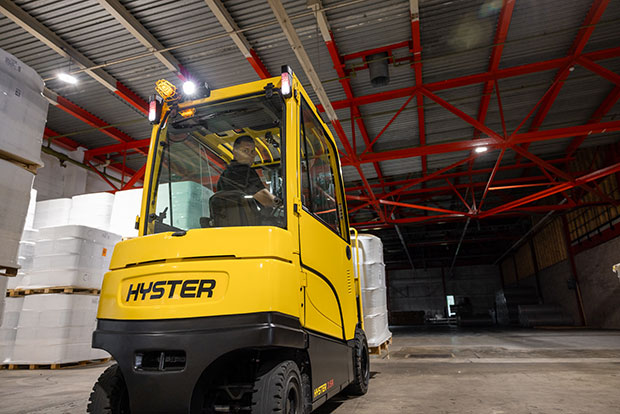
Switching from bright outdoors to dimmer indoor spaces, can cause visibility issues that raise the risk of mistakes or slowdowns. Lights can be mounted on the forklift cab or directly on the mast to avoid casting shadows that interfere with the operator’s view.
2. VARIED GROUND AND DEBRIS
Moving from pavement to gravel to flat flooring, and over ramps, thresholds like steel plates or scattered debris, can risk operator discomfort. Forklifts with increased ground clearance can help operators clear difficult terrain. Belly pans can be bolted onto the undercarriage to help prevent debris from flying up into the truck.
A full- or semi-suspension seat can help minimise body vibration to reduce operator fatigue, and hydraulic accumulators can act as a shock absorber, reducing vibration experienced by the operator.
3. UNPREDICTABLE ENVIRONMENTS
Different environmental factors like tractor-trailer diesel fumes, temperature shifts, wind and moisture can take a toll on operators and equipment. Windshield wipers can help clear away rain and debris for greater operator visibility. An overhead guard cover, either shaded or UV-protected, provides coverage from the sun. Enclosed cabs can keep sun, rain and snow off operators while enabling temperature control and helping to block out harsh smells.
4. UNUSUAL LOADS
In many facilities, particularly in the manufacturing and logistics industries, loads can come in a variety of shapes, sizes, and weights. Forklift attachments like side-shifting fork positioners can help reduce effort and increase operator confidence in handling a wide range of pallets and loads.
5. NOISE
Operators are already busy managing heavy equipment and staying alert in fast-paced settings. Sudden changes in noise, like from a loud facility to a quiet yard, can disrupt their focus. Many forklifts can be equipped with sound absorbing material in the underside of the floor plate, inside the dash covers, inside the side panels and inside or under the hood. Electric-powered forklifts generally run quieter than their internal combustion counterparts, cutting down on noise around the operator.
6. TIGHT SPACES
Close quarters inside the back of trailers can make it difficult for operators to manoeuvre equipment, get clear sightlines, and handle loads efficiently. Short forklift masts can give operators a clearer view over the top to limit the need to crane their necks and can help reduce the risk of the mast striking the top of the trailer. Swivel seats can help operators pivot and get a better view of their surroundings without constant neck craning. To learn more, contact your local Hyster dealer or visit Hyster.com.
Comments are closed.