



For many businesses, the run-up to peak season is a familiar test of warehouse capacity. Order volumes can rise sharply, product ranges continue to expand and customers expect ever-faster fulfilment. At the same time, labour availability and warehouse space remain ongoing challenges.
As another busy trading period approaches, the ability to adapt is becoming just as important as the ability to maximise throughput.
A warehouse designed around today’s operation may work well under normal conditions, but seasonal peaks can quickly expose limitations. Picking routes become busier, storage locations fill up and additional stock puts pressure on already constrained space. Rather than treating these challenges as purely seasonal problems, businesses should consider how their storage infrastructure can support changing requirements throughout the year.
One of the most effective ways to improve warehouse performance does not necessarily involve introducing more automation. Optimising the fundamentals of storage and picking can deliver significant gains in efficiency.
Product location, storage density, accessibility and picking ergonomics all influence how quickly an order can move through the warehouse. A well-planned storage system can reduce unnecessary travel, improve stock visibility and make it easier for operators to locate and pick products accurately.
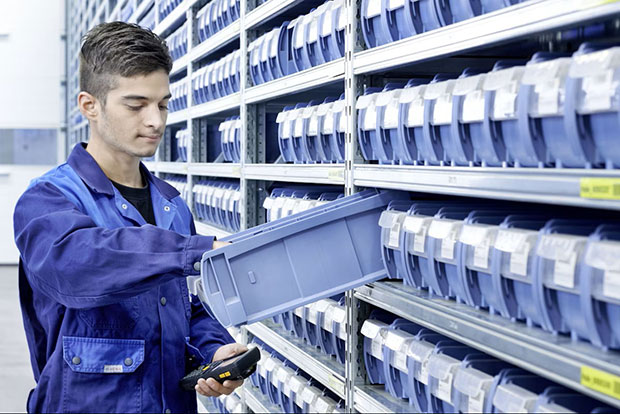
Carton Live, for example, provides dynamic storage for cartons and totes while supporting FIFO stock rotation. Products are presented at an accessible picking face, helping operators work efficiently while making better use of available space. Flexible shelving can similarly provide clear product locations while adapting as SKU numbers and requirements change.
Peak periods present a particular challenge for e-commerce and fast-moving goods warehouses. Investing in enough permanent capacity to cope with the busiest weeks of the year can leave valuable space underutilised during quieter periods.
Modular systems can be extended, reconfigured or supplemented as requirements change, allowing businesses to increase capacity without committing to a complete warehouse redesign. Additional shelving, bays or storage containers can be introduced as stock levels grow, while layouts can be adjusted as product ranges and picking processes evolve.
For businesses preparing for Black Friday and Christmas, this flexibility can support a more measured approach to peak planning.
Small changes can have a cumulative impact. Improving product locations, adding dividers to shelving, introducing additional containers or reorganising picking areas can all contribute to a more efficient operation. However, planning should extend beyond the next seasonal surge. As order volumes increase, SKU numbers grow and customer expectations evolve, storage systems that work effectively today may become restrictive tomorrow.
For businesses with limited space, bespoke solutions that maximise existing storage capacity and unlock previously unused areas can be particularly valuable. Demonstration facilities and experience centres can also help warehouse teams compare different storage approaches and understand how systems perform in practice before investing.
Ultimately, there is no universal blueprint. The right solution depends on the products being stored, order profiles, available space, picking methods and future business plans.
What is becoming increasingly clear is that warehouses need to be designed with change in mind. The ability to add capacity, reconfigure storage and make continuous improvements can give businesses greater control as demand fluctuates.
For operators, the goal should not simply be to survive the next peak, but to create a warehouse that can respond to the next high-volume period, product range and stage of business growth – without becoming a constraint along the way.
For advice on how you can make the most of your storage capabilities, contact BITO Storage Systems for a free site visit, email: info@bito.com or call: 024 7638 8852.
Comments are closed.