



Vibracoustic is a leading global automotive NVH expert with around 12,000 employees at 40 production and engineering locations worldwide. The company develops customised solutions that improve comfort, efficiency, safety and durability in passenger and commercial vehicles. Due to its broad product range, Vibracoustic relies on efficient, smooth intralogistics in its plants to ensure that all the parts, materials, and components required for the next production step are available at the workstations on the shop floor as quickly and accurately as possible. For this purpose, the company uses various manual transport systems in its plants, such as forklifts and tugger trains, writes Bastian Schwengers, a technical journalist from Cologne.
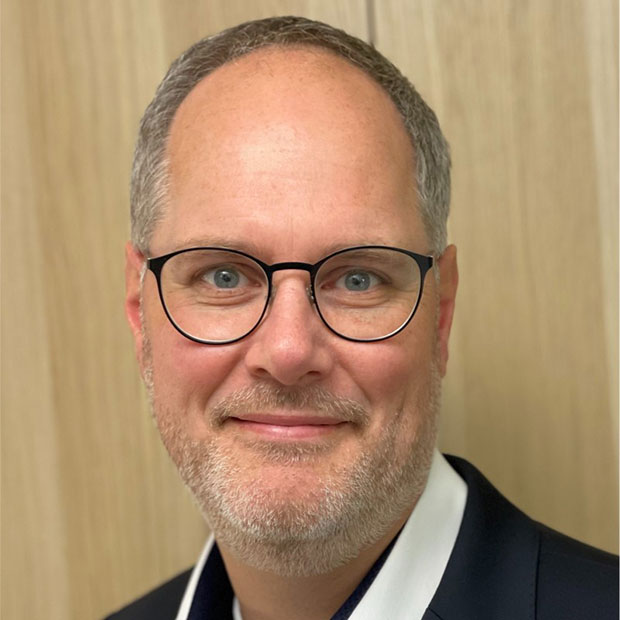 Torsten Fründt, Logistics Project Manager at Vibracoustic: “We have a sophisticated concept for material supply in our factories. With the introduction of our new AGVs, we wanted a universally applicable solution that would allow us to be independent of individual manufacturers and scale more flexibly.”
A manufacturer-independent master control system
As part of a pilot project, Vibracoustic introduced a central master control system at its Forsheda plant in southern Sweden. The solution had to control Toyota SAE160 forklift AGVs, which are not compatible with the standardised VDA 5050 interface, coordinate different transport systems and integrate seamlessly into the company’s SAP and Azure environment. Vibracoustic ultimately selected FleetExecuter from MHP.
Torsten Fründt recalls: “Finding a solution that fits our requirements was not easy. Based on our experience, we work best with a combination of manual and automated processes. One of the things that spoke in favour of MHP FleetExecuter was that it can handle these hybrid scenarios excellently and optimise them holistically.”
The project started in August 2024 in Forsheda. Teams from MHP, Vibracoustic and Toyota defined the milestones: implementing FleetExecuter, connecting it to Toyota’s T-One fleet management system and integrating it with SAP and the Azure Cloud. The future process combined automated and manual transport: Toyota AGVs were to handle all movements into and out of the high-bay warehouse, while manually operated forklifts remained in use for oversized pallets and special packaging movements. Manual tugger trains continued to supply production workstations, receiving their transport orders through FleetExecuter.
While the implementation and IT integration went largely smoothly, connecting FleetExecuter to Toyota’s T-One controller was more complex. Toyota’s specific communication protocol required adjustments to the FleetExecuter interfaces. “Thanks to close coordination with Toyota, we were able to implement this quickly,” says Stefan Herrmann, Project Manager Digital Supply Chain Solutions at MHP.
Efficient processes and a relieved workforce
The project went live in March 2025. Since then, Toyota AGVs have automated the transport of raw materials between goods receiving, the high-bay warehouse and the transfer station for manual onward transport to production. Finished products such as drive shafts and engine mounts are moved from the high-bay warehouse to goods issue. FleetExecuter controls and coordinates the systems so they interact smoothly with human colleagues.
The new processes have increased intralogistics efficiency at Forsheda and provide Vibracoustic with a blueprint for further sites. Vibracoustic is already rolling out the concept to other sites: following Forsheda, the solution went live in M?lník (Czech Republic) in November 2025, in T?ebechovice and Hamburg in June 2026. This allows existing solutions to be adapted to individual plants with minimal effort.
Torsten Fründt: “FleetExecuter gives us more flexibility than before when selecting new AGVs. If desired, we can also combine different autonomous transport systems. As a universally applicable control system, FleetExecuter also ensures that we no longer have to start from scratch with every automation project. Instead, minor adjustments will suffice in the future to meet the specific requirements of each plant.”
Comments are closed.