



Warehouse automation is accelerating at an unprecedented pace. From autonomous mobile robots (AMRs) and automated storage and retrieval systems (ASRS) to conveyor networks and advanced picking solutions, modern logistics operations are becoming faster, more efficient and increasingly sophisticated.
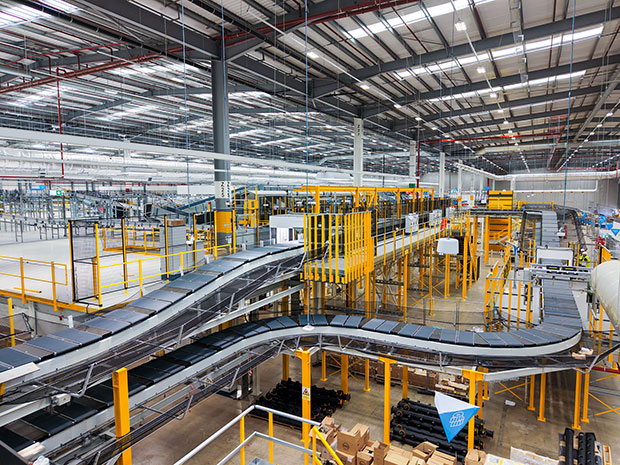
As businesses invest in automation to improve productivity, increase capacity and respond to rising customer expectations, attention is often focused on the technologies themselves. Yet the success of any automated operation depends on something far more fundamental: the structure that supports it.
The effectiveness of warehouse automation is ultimately determined by how well technology, infrastructure and operational processes work together.
The Foundation of Successful Automation
Automation is never a standalone investment. Conveyors, robotics, sortation systems and picking technologies all rely on a carefully designed physical environment to operate effectively.
When buildings and systems are designed as a single integrated solution, they deliver greater efficiency, smoother material flows, and enhanced flexibility.
Conversely, infrastructure that is not designed with automation in mind can quickly become a limiting factor, constraining future growth and reducing operational efficiency.
As automation becomes increasingly central to warehouse operations, structural engineering is evolving from a supporting discipline into a key component of warehouse design.
In many projects, infrastructure decisions made at the earliest stages ultimately determine how efficiently automated systems will perform throughout their lifecycle.
Making Space Work Harder
As warehouse operations become more complex, making effective use of every cubic metre has become a critical objective.
In new developments, mezzanine floors help create logical, multi-level environments where different operational activities can be separated and optimised. Picking areas, packing stations, conveyor routes, technical installations and value-added services can all be strategically positioned to improve efficiency whilst preserving valuable floor space.
The same approach can unlock significant benefits within existing facilities. Rather than relocating or extending the building externally, organisations can unlock additional capacity by making better use of their vertical space.
For many businesses, this is a practical and cost-effective way to accommodate growth while preparing for future automation requirements.
Engineering for Performance
Automated systems place significantly different demands on a structure than conventional warehouse storage.
Dynamic loads, concentrated point loads, equipment vibrations, service integration and maintenance access all require careful consideration during the design phase. A mezzanine floor supporting advanced automation must provide far more than additional floor space. Precision is essential.
Cold-formed steel mezzanine floors offer a strong balance of structural performance, installation efficiency and design flexibility. Their lightweight construction allows for longer spans, faster installation and reduced disruption on site. At the same time, they deliver the structural performance required for modern automated operations.
Equally important, they can be designed to accommodate future modifications as operational requirements evolve.
This is one reason why successful automation projects increasingly rely on close collaboration between structural engineers, automation specialists, architects, contractors and warehouse operators. Bringing these disciplines together from the outset helps reduce complexity, minimise costly redesigns and create facilities where every component works together as part of a single operational strategy.
The result is not only a smoother installation process, but a warehouse that performs more effectively throughout its operational lifecycle.
Designing for Future Growth
Automation technology continues to evolve rapidly. Systems that represent best practice today may require expansion, modification or integration with new technologies tomorrow.
For this reason, flexibility has become a key consideration in warehouse design.
Modern mezzanine floor systems can be engineered to accommodate additional conveyor routes, changes in operational layout or future system upgrades with minimal structural intervention. This adaptability helps protect investment, minimise disruption and support long-term business growth.
For warehouse operators, future-proofing is no longer simply desirable, it has become an essential part of planning for sustained operational success.
Supporting Efficiency, Safety and Scalability
The benefits of structural design extend far beyond creating space for automation. Increasingly, warehouse operators are investing in infrastructure that enhances operational efficiency, improves safety and supports long-term scalability.
A well-designed mezzanine floor helps create logical workflows and clearly defined operational zones. By allocating activities such as storage, picking, packing and technical services across multiple levels, businesses can reduce unnecessary travel distances, improve material flow and make more effective use of available space.
As warehouses become more complex and technology-driven, these design considerations become increasingly important. Automated equipment performs most effectively when integrated into an environment where processes, operators and product flows are carefully organised.
Safety also remains a critical factor. Introducing conveyor systems, robotics and other automated technologies requires careful planning of load capacities, access routes, maintenance areas and the interaction between personnel and equipment. Structural solutions designed with these requirements in mind help create safer working environments while supporting reliable day-to-day operations.
Ultimately, organisations are not simply seeking additional capacity, but facilities that can deliver consistent performance and support future growth.
Building the Infrastructure Behind Automation
While warehouse automation is often associated with robotics, software and advanced technology, its success ultimately depends on the infrastructure beneath it.
Whether creating a new distribution centre or modernising an existing facility, organisations increasingly recognise that structural design plays a far more strategic role than simply supporting equipment. It creates the framework that allows automated operations to achieve their full potential.
At John Scott Works, we see this every day. By working alongside developers, contractors, automation specialists and end users, we deliver bespoke cold-formed steel mezzanine floor solutions that support efficient material flows, maximise available space and provide the flexibility required in modern logistics environments.
As automation continues to transform the warehouse sector, one principle remains constant: advanced technology delivers its greatest value when supported by the right infrastructure.
Comments are closed.