



Birmingham’s NEC opened its doors to the UK’s leading packaging event, with hundreds of exhibitors unveiling cutting-edge solutions while Pack UK revealed over £1bn distributed to support local authority waste management.
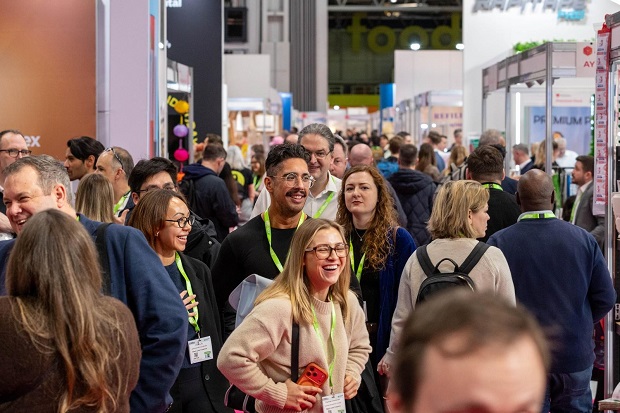 The packaging industry’s leading figures gathered at Birmingham’s NEC as Packaging Innovations & Empack 2026 opened its doors, promising two days of innovation, insight, and connection. The event was formally launched with a ribbon-cutting by Josh Brooks, Divisional Director – Packaging Portfolio at Easyfairs, and Councillor Annette Mackenzie, Mayor of Solihull, which opened the industry up to 475 exhibitors who had transformed halls 2, 3, and 3a into a showcase of the full packaging supply chain. From cutting-edge design and materials at Packaging Innovations, to automation, robotics, and AI at Empack, and bespoke solutions at Contract Pack & Fulfilment, every stage of the industry came together to tackle real-world challenges and highlight the future of packaging.
 “Today promises to be the biggest and the best edition of this show in our 21-year history,” said Brooks. “This event is all about innovation, it’s in the name, and it’s all about creating the future of packaging, whether we’re thinking about design, whether we’re thinking about materials, whether we’re thinking about processing technologies or outsourcing opportunities. It’s all here and we hope that you will, as visitors to the show, have a fantastic experience of discovery and you will go away with the toolkit to create your next product. It’s also extremely human and I really encourage you all, at an event like this, to not just discover the things, but to discover the people and make those connections, come away with new connections and new future partners for the projects that you work on. That’s the joy and the fun of any work that we do, and certainly for us who have the privilege of putting on events, it’s what we do.”
 Councillor Mackenzie added: “Packaging plays a vital role in our economy, enabling food supply, healthcare, e-commerce, and consumer goods, while supporting jobs, skills, and resilient local supply chains. Our region is proud to be a hub for manufacturing excellence and innovation, and today’s SMEs and local manufacturers are driving progress through new technologies, smarter design, and more sustainable solutions. Innovation and sustainability are clearly at the heart of this event, as the sector works collaboratively to reduce impact, improve efficiency, and create long-term value.”
Chief Strategy Officer Esther Carter took to the stage today to reflect on Pack UK’s first year, updating attendees on the progress of its Extended Producer Responsibility (EPR) scheme. Pack UK used last year’s show to officially launch the scheme, marking the transition from decades of policy development into a fully functioning organisation. Twelve months on, Carter highlighted how the scheme has moved from concept to reality, with the first notices of liability issued to producers and over £1 billion already collected and distributed to local authorities to invest in waste management systems.
The total cost of the scheme is £1.4 billion, representing the provision of an efficient and effective local authority waste disposal service. This is spread across just over 4,000 producers, with 4,299 obligated producers receiving notices of liability for household packaging waste. Across the whole scheme, there are around 7,000 obligated producers, while funding is being distributed to 388 local authorities across the four nations. To manage this, Pack UK’s team of around 60 people has focused on ensuring the right digital systems, risk management, and operational oversight are in place to transact such large-scale payments effectively.
“We anticipated there were going to be some bumps along the way,” said Carter. “There have been some challenges, and we are working with stakeholders across the value chain to refine our approach, ensuring we adjust policy alongside our policy colleagues while providing as much clear guidance and communication as possible to everyone in this room and beyond. Notably, last year, we not only began collecting payments but also began issuing them to local authorities. As of today, we have paid out over a billion pounds to support investment in local waste management systems.”
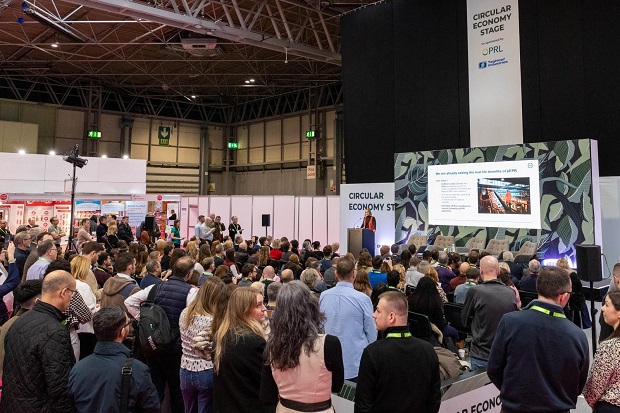
Carter also addressed reports of a shortfall in money raised for year-end invoices, which may force Pack UK to reissue Extended Producer Responsibility (EPR) bills to obligated businesses. Speaking on a packed Circular Economy Stage, she said: “What I think perhaps has not always been as clear to people in developing this scheme is that Pack UK is required to balance the books at the end of each year. Pack UK can have no surplus rolling into the next year, nor can it have a gap. If any of those items change, there is a need to think about how we calculate fees in order to account for that. And we are the first to recognise that in year one, that creates a lot of challenge. We are working to figure out how to amend the legislation to make sure that we can create as much stability as possible for producers in future years. We have heard the calls from industry loud and clear. It is absolutely our intent to make sure that we are providing multiple years in advance visibility as to what is to come. None of us like surprises. Local authorities don’t want surprises, producers don’t want surprises. We also have to make sure that we are operating in line with the law.”
Paul East, Head of Packaging Recycling & Design at Recoup, highlighted the practical side of recyclability, showing how brands and manufacturers can design plastic packaging that is truly recyclable in the real world. “We do trials and tests on members’ packaging, taking them through a materials recycling facility to see what actually happens,” he said, emphasising that “Our guidelines show exactly what changes you can make to make your packaging more recyclable.” Alison Bramfitt, Nestlé’s Head of Packaging UK & Ireland, stressed the strategic approach needed across the supply chain: “Designing for recycling isn’t just about the material, it’s about understanding the system, the capacity, and consumer behaviour in every market we operate in,” adding that “We must take our suppliers on the journey with us, ensuring innovations meet our requirements and are available when we need them.” Together, their insights underscored that achieving meaningful recyclability requires both practical testing and coordinated action across the industry.
Meanwhile, Prevented Ocean Plastic™ launched the first-ever polypropylene (PP) recycled to the European food-safe standard. PP, found in cups, bottles, caps, and films, is the second most common plastic polluting oceans, yet virtually none is recycled. Developed with global partners, this breakthrough allows PP to be recycled at scale into high-quality, food-safe packaging, and is expected to prevent 500 million cups from entering the ocean in its first year. “The team at Prevented Ocean Plastic is so proud that after many years of work, we’ve been able to use our franchise model, go through audited collection, and bring to the market mechanically recycled, food-safe RPP to the European standard. To date, 80 million tonnes of polypropylene are produced annually, and by most estimates, less than 1% is recycled. Between now and a year from now, we’re expecting hundreds if not thousands of products to be made for the first time ever from mechanically recycled, food-safe RPP, allowing consumers to make a better choice and really do something special,” said Raffi Schier, Founder of Prevented Ocean Plastic™.
Castle Colour showcased its plastic-free, multi-purpose barrier board, designed to protect a wide range of products while helping brands reduce costs and improve recyclability. Paul Densley, Managing Director, said: “We’re in a huge innovation stage at the moment, which is really exciting. We’re doing lots of embellishment and really funky creative designs, but the biggest thing we’re pushing is FibreGuard, our own devised barrier solution for fibre-based packaging to remove laminate and reduce EPR costs. It takes plastic out of packaging while providing a barrier for grease, soap, not just food, but all sorts of applications. After years of testing, we’re confident taking it to market, and we already have customers in cosmetics and food successfully reducing costs through plastic reduction. Cost is king, sustainability has to stack up commercially.”
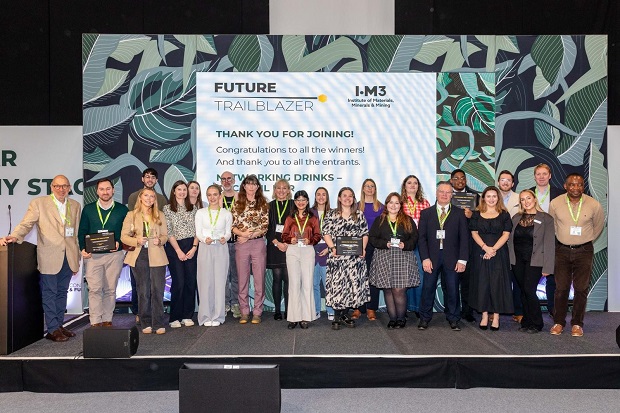
The Future Trailblazers 2026 winners were announced during another packed afternoon session, celebrating the next generation of packaging professionals driving innovation, sustainability, design excellence, and operational impact across the supply chain. In partnership with IOM3, the programme recognised 26 finalists selected from 78 nominees, with seven standout winners, Isobel Duignan (Nestlé), Yaseed Chaumoo (GreyParrot AI), Dhruvi Thakkar (Sleeve Office Ltd), Jayne Cunningham (New England Seafood), Jess Morgan Butler (Carlton Packaging), Jordan Scott (James Cropper), and Olivia Tomlinson (Nestlé), and nine highly commended professionals.
Jordan Scott said: “In today’s market, collaboration is key to success, and within this role, I have been given the freedom to explore some fantastic and powerful opportunities, allowing us to effectively communicate our world-class capabilities and creativity. Over the last few years, I have had the privilege of playing a small role in many exciting projects and partnerships. It never ceases to amaze me how far our product truly reaches and what possibilities this opens for us.”
David Hainsworth, Director of Sheard Packaging, described the event as, “the best show I’ve attended in a long time, a fantastic location and perfectly organised.
“The footfall has been excellent, with high-quality visitors throughout. We’ve met everyone we hoped to see, and then some. Really looking forward to day two!” Sheard Packaging, the show’s Official Innovation Partner, was showcasing its expertise through its 40-foot Mobile Innovation Centre (MiC).
At the brand-new Discovery Theatre, innovators explored how materials and design can reshape sustainability in packaging. Craig Sterling, co-founder of MarinaTex, showcased the company’s natural polymer solutions aimed at replacing problematic single-use plastics. He told the audience that 97% of these plastics are never recycled, generating more waste annually than the total weight of all people on the planet.
“We think there’s something we can do about it. So what we’ve done is we’ve developed all natural solutions using natural biopolymers that already exist in nature. Nature can make things that are waterproof. Nature can make things that are resilient. And then when it goes back to the environment, the environment then can now be collected and it’s in a fully circular system. We believe that the biggest problem is it’s a systems challenge and not just about the materials; it’s a systems challenge.”
MarinaTex’s fully circular, biodegradable alternatives mimic nature’s own solutions, waterproof, resilient, and safe to return to the environment, tackling systemic plastic waste while maintaining performance and functionality.
Meanwhile, Lena Yipp of Acentrixia demonstrated how reusable insulated takeaway bags can elevate the food delivery experience by combining quality, sustainability, and brand visibility. “The bag is something that everyone touches, everyone carries, and almost forgets immediately. It becomes invisible by design. When something becomes invisible, we stop questioning it,” she explained. Highlighting the power of thoughtful design, she added: “Reuse fills best when it’s effortless. When something is useful enough to keep, reuse happens naturally. Packaging stops being waste. It has become something useful that you interact with every day.”
Phil Walker, Technical Director at IPS, the UK’s largest co-packer and part of the Culina Group, hailed the opening day as a resounding success. “We’ve been warmly welcomed by the show organisers and the BCMPA, and the day has been incredibly busy, with high footfall and engaging conversations. Everything we work hard to be good at, quality, flexibility, operational excellence, and technical compliance, resonated strongly with the brands that chose to speak with us. It’s rewarding to see our values and capabilities align so clearly with visiting brands, and we’re very impressed with our debut at the event.”
Don’t miss Day 2 of Packaging Innovations & Empack 2026. Join the conversation, explore breakthrough solutions, and see how the future of sustainable packaging is taking shape.
Comments are closed.