



Whether companies are ready for it or not, the law is currently going to change. The Government’s proposed Zero Emission Vehicle (ZEV) Mandate supports the shift to electric vehicles in the run up to the ban on the sale of new petrol and diesel vehicles in 2035, and it is highly likely to become law later this year following the final consultation which closed on 24th May.
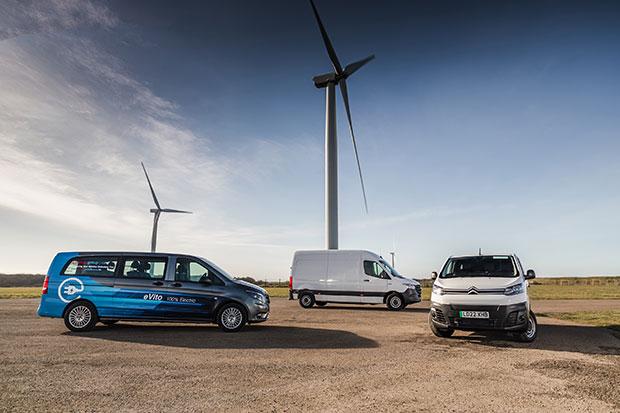 Last mile delivery, and therefore the warehouse and logistics industry, will be directly affected. The positive aspect of this is that it presents the opportunity to significantly impact carbon reduction without affecting production or delivery times.
Whilst many companies are not sure about how to begin their transition to electric vehicles (EVs) for various reasons, it is imperative that businesses begin planning for a net zero future. The proposed ZEV Mandate states that from 2024, 10% of new vans sold will need to be electric, with that number increasing to 70% in 2030 and 100% in 2035. As LCV manufacturers will need to increase their production of EVs, by definition, the availability of ICE vehicles will decrease within the UK causing more demand issues and driving up the price. In turn, the price gap between EVs and ICEs will reduce leading to price parity in a few short years.
It may seem that the best business decision is to wait until that price parity point is reached. However, the benefits of making the transition to an electric fleet now far outweigh any perceived disadvantages.
With a growing number of low and zero emission zones in cities around the country, businesses need to ensure that their fleet meets the required standards to avoid significant charges. Not only do electric LCVs avoid those charges completely, but they are also the quickest, easiest and cheapest way to reduce carbon emissions without impacting productivity.
As sustainability becomes more of a focus in every industry, more and more companies are choosing to work with others that have a clear carbon reduction plan. An electric fleet will generate more business opportunities by demonstrating your commitment to net zero emissions as well as your business agility.
Another benefit of adding EVs to your fleet is that maintenance and servicing costs are significantly lower than for ICE vehicles. They spend less time being repaired and more time on the roads, making them much more efficient, reducing overall running costs and increasing profit margins.
Although it may seem more expensive to invest in EVs at the moment, Dawsongroup has a risk-free solution that provides complete flexibility and scalability. With a range of electric LCVs which can be hired on either a fixed or flexible hire agreement, you can introduce them to your fleet gradually with no risk to capital. Service and maintenance are also included; Dawsongroup service engineers are fully trained in EV maintenance, providing the same high standard of service as is provided for diesel vehicles.
Utilising usership over ownership enables companies to adopt new technology and transition to an electric fleet at a speed and scale to suit their business needs.
EVs are a viable solution to carbon reduction. Looking at the efficiency of your fleet and adapting your operations to integrate carbon reduction will make your fleet work smarter.
Electric vehicles are here to stay. Are you?
Contact Dawsongroup on 01908 218111 or visit dawsongroup.co.uk to find out more about how a Smarter Asset Strategy can provide you with innovative solutions to support your business on the journey to net zero.
Comments are closed.