




In today’s warehouse and distribution environments, when it comes to labour, high turnover, seasonal spikes, and increasing service expectations have made one thing clear: the speed and effectiveness of onboarding can make or break operational performance.
 Across the industry, turnover rates in the U.K. regularly range from 25-40%. Even more striking, nearly 30% of new hires leave within their first 90 days, often due to poor onboarding experiences or unclear expectations. In this environment, fast, low-friction onboarding needs to be a core operational capability.
 The Cost of Slow or Ineffective Onboarding
The consequences of ineffective onboarding are immediate and measurable: productivity suffers as new employees can take weeks to reach full performance. At the same time, error rates tend to rise, leading to rework, returns, and customer dissatisfaction. Poor onboarding also contributes to higher turnover, as cited above. When accounting for onboarding, training, and ramp-up time, the total cost to replace a single warehouse employee can realistically exceed £5,000 to £10,000, making turnover a significant operational and financial challenge.
Why Low-Friction Onboarding Matters More Than Ever
The most successful distribution operations have recognised that onboarding must be:
- Fast – Workers need to become productive in hours or days, not weeks
- Intuitive – Systems should guide users naturally, without requiring extensive memorisation
- Consistent, but adaptable – Every worker should receive the same quality of instruction, regardless of supervisor or shift, while still having the flexibility to adjust based on their abilities. For warehouse and DC operators, this means leveraging technology with features like tiered workflow modes (e.g., Easy, Standard, Advanced), adjustable verification steps, shortcut keys, and New vs. Veteran user settings to drive stronger engagement and efficiency.
- Scalable – The process must work just as well for 10 new hires as it does for 200 during peak season
This is especially critical for seasonal labour, where workers may only be on-site for a few weeks or months.
How Lucas Systems and Jennifer™ Voice AI Address the Challenge
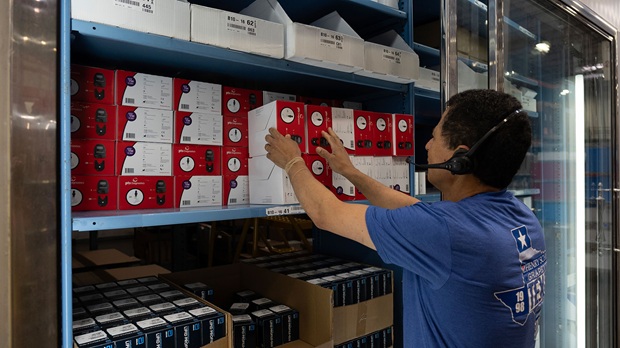
One of the most effective approaches to reducing onboarding friction is to embed training directly into the workflow. That’s where Lucas Systems’ Jennifer™ Voice AI stands apart from traditional warehouse voice solutions.
Unlike older voice systems that rely on rigid scripts and extensive pre-training, Jennifer is designed to be intuitive, conversational, and adaptive. Workers don’t need to memorise commands or navigate complex menus. Instead, they are guided step-by-step through their tasks using natural, easy-to-understand voice instructions. Key differentiators include:
- Learn-by-Doing Training Model – Jennifer enables new hires to begin productive work almost immediately. Instead of separating training from execution, the system teaches as it guides, allowing workers to learn on the job. This dramatically reduces time to proficiency.
- Natural Language and Simplicity – Jennifer uses more natural interactions, commands and phrases, reducing cognitive load and making it easier for first-time users to adapt quickly. Jennifer also speaks and listens in 30+ languages, necessary in today’s distribution environment.
- Real-Time Error Prevention – The system provides immediate feedback and validation, helping prevent mistakes before they happen. This builds confidence in new workers while maintaining high accuracy.
Real-World Impact: Faster Ramp-Up, Higher Productivity
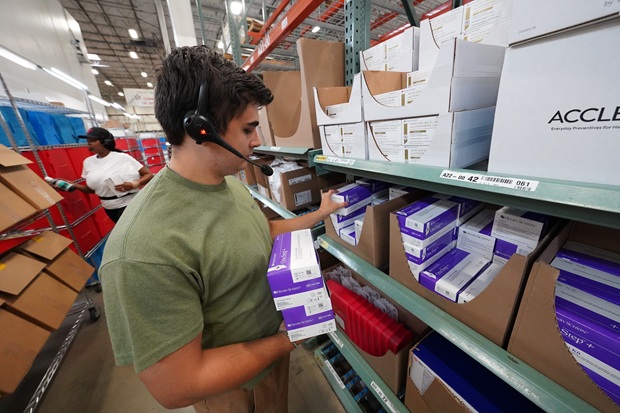
Many Lucas Systems customers report that new associates can be trained and working productively in as little as 1–2 hours, compared to days or even weeks with traditional methods. Global healthcare distributor Henry Schein, for instance, saw a 20-30% reduction in training time for new workers.
Beyond speed, the impact extends to retention. Workers who feel confident and supported early in their tenure are significantly more likely to stay. By reducing frustration and uncertainty, intuitive voice systems help break the cycle of early attrition.
In a labour environment defined by high turnover and constant change, onboarding is a continuous operational priority.
Solutions like Lucas Systems’ Jennifer Voice AI demonstrate how technology can transform onboarding from a bottleneck into a competitive advantage. By embedding guidance directly into execution and making systems easier to use, organisations can build a workforce that is not only faster to deploy, but more capable, confident, and consistent from day one.
Comments are closed.