




As the global healthcare sector accelerates toward decarbonisation, one question looms large: can zero emission vehicles truly meet the demanding standards of pharmaceutical logistics? A pioneering 2,650 kilometre electric truck trial by Yusen Logistics and GSK suggests the answer is yes, and that a cleaner future for temperature controlled transport is already within reach.
A Partnership Built on Innovation
For more than 20 years, Yusen Logistics and GSK have forged a collaborative relationship centred on high performance distribution across Europe. As both organisations pursue ambitious Scope 3 decarbonisation goals, innovation is no longer optional, it’s essential.
Their most recent joint initiative posed a bold challenge:
“Can an electric vehicle reliably support long distance, temperature controlled healthcare transport?”
To find out, the teams set out to test not just the truck’s technical capability, but also its real world performance: energy consumption, charging availability, GDP compliance, and total service impact.
The Journey
A Week, 2,650 km, Zero Emissions
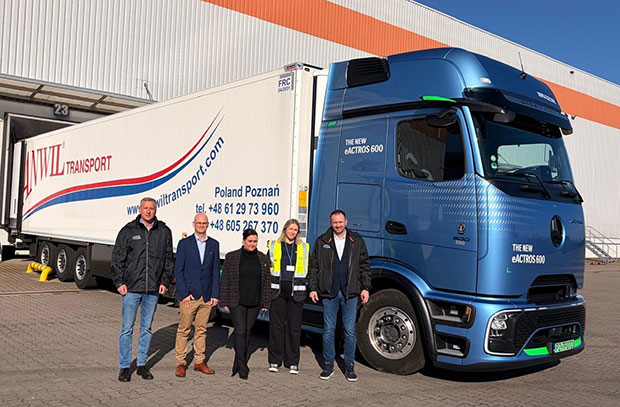
In late February, an electric truck operated by Anwil Transport departed from Pozna?, Poland, bound for Vatry, France, before returning to its starting point. Over one week, the vehicle covered 2,650 kilometres using only public charging infrastructure located in Poland, Germany, and France.
Why public charging?
To replicate the realities of cross border healthcare logistics without relying on specialised depot support.
The result: charging synced smoothly with driver breaks, chargers were consistently available, and no service delays occurred.
Sidebar: Key Performance Stats
•Average energy consumption: 94 kWh / 100 km
•Total energy used: 2,346 kWh
•Average speed: 69 km/h
•Total charging time: ~8 hours across eight stops
•Carbon saving potential:
o 5.6 tonnes CO?e per round trip
o >290 tonnes CO?e annually — equivalent to powering 60 homes a year
Uncompromised Pharmaceutical Standards
Temperature controlled pharmaceutical transport leaves no margin for error. Yet throughout the journey:
•No temperature deviations occurred
•No delays were recorded
•No impact on lead times
•Full compliance remained intact
The electric truck matched the performance of conventional diesel vehicles, without the emissions.
“Zero emission transport can meet the strictest standards of pharmaceutical distribution.”
Partner Perspective
Anwil Transport, responsible for operating the trial vehicle, reflects: “This project represents another milestone in our long-standing collaboration and our shared commitment to developing modern, sustainable logistics solutions. Close coordination, continuous monitoring, and transparent communication made this possible in a highly demanding environment.”
The Bigger Picture
The importance of this trial extends beyond a single journey. It marks a pivotal moment in the evolution of sustainable healthcare logistics. The success provides:
•Validated performance data for future EV strategy
•Increased confidence in electrifying long distance healthcare routes
•A model for scaling zero emission distribution across Europe
As battery technology advances and charging networks expand, electric vehicles are poised to take on a larger role in pharmaceutical logistics, sooner than many expected.
A Greener Future Is Already on the Move
The Yusen Logistics and GSK trial demonstrates that zero emission long haul transport is not an aspiration, it’s a viable reality. And with each successful test, the healthcare industry moves a step closer to a more sustainable, resilient global supply chain.
Interested in exploring low carbon healthcare logistics for your organisation?
Yusen Logistics’ team is ready to help build a cleaner, future ready distribution strategy.
Comments are closed.