


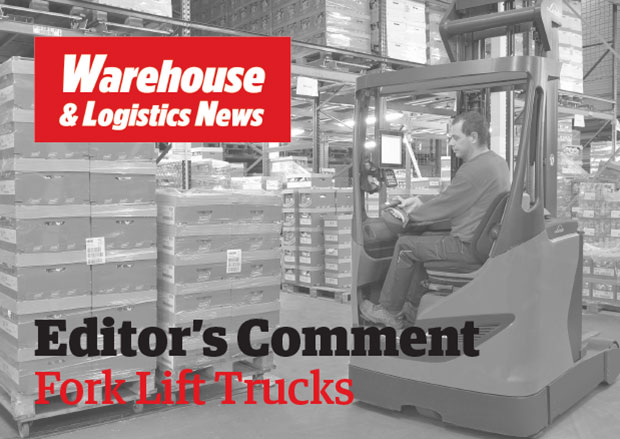
Electrification is one of the most transformative and irreversible trends in the forklift market, writes Maya Xiao, Research Manager at Interact Analysis. The systemic shift from internal combustion engines (ICE) to electric powertrains, predominantly lithium-ion (Li-ion) batteries, is fundamentally reshaping the industry’s competitive dynamics, operational protocols, and environmental impact. An estimated 83% of all new electric forklifts shipped will have Li-ion batteries in 2034, rising sharply from 42% a decade earlier.
This article was first published in the April 1st 2026 issue of Warehouse & Logistics News, subscribe to the magazine by clicking here.
As an industrial lithium-ion manufacturer supplying material handling fleets, maxwell+spark has observed a shift in how operators think about power. Batteries are no longer treated as consumables that must be managed; they are increasingly viewed as long-term assets. Designed for extended service life, motive.li systems are engineered to deliver stable output across demanding duty cycles and, in many cases, to outlast the trucks they power.
Based on customer experience from over 170,000 vehicles sold, Jungheinrich has completely redesigned the EFG 2/2i & 3/3i series of electric counterbalance trucks in the popular load capacity class up to 2 tonnes. They are aimed at users who want to see high productivity, safety and future-proofing combined in a compact vehicle concept. With the EFG 2/2i series, Jungheinrich offers particularly manoeuvrable three-wheel forklifts with load capacities from 1.4 to 2.0 tonnes, while the EFG 3/3i series covers the range from 1.6 to 2.0 tonnes as four-wheel forklifts.
Clark Europe has announced a new strategic partnership with Arko d.o.o. as its official distribution partner for Slovenia. The collaboration underscores Clark’s goal of further expanding its presence in the European market and strengthening its position as a leading supplier of industrial trucks. Arko, a renowned specialist in truck upgrades and logistics solutions, will now take over exclusive distribution of the entire Clark product range in Slovenia.
As manufacturers and distribution centres intensify their focus on operational excellence, automated solutions are emerging as a powerful remedy to enable more efficient material flow and maximise value across material handling operations. Rooted in lean manufacturing, the philosophy of Zero Muda focuses on eliminating waste, with Muda, a Japanese term for waste, referring to any activity that consumes resources without adding value. “Zero Muda is about eliminating waste at its source,” said Kelvin Taylor, Head of Logistics Solutions at Toyota Material Handling UK. “Automated forklift trucks allow operations to standardise material movement, reduce damage and errors, and make better use of space, talent and energy – all core principles of Lean operations.”
Forklift electrification has passed the tipping point, evolving from a forward-looking trend into a core strategy that determines future enterprise competitiveness.
George Simpson
Features Editor
Comments are closed.