




With complex equipment, tight spaces, and constant movement, the risks when carrying out materials handling operations in warehouses are real and ever-present.
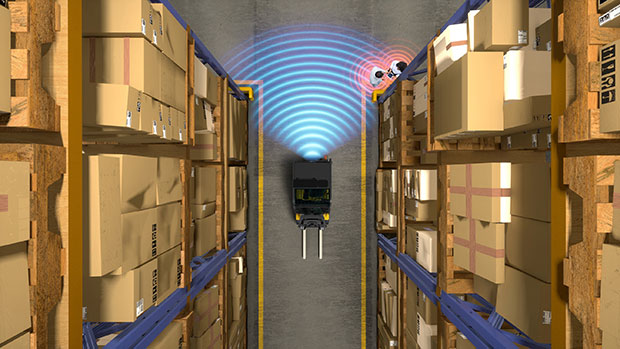
However, here are 11 actionable forklift safety tips which may help you safeguard your workforce and your warehouse.
1. Only correctly trained operators should use lift trucks
A comprehensive training programme can help operations deliver fully compliant training in line with local regulations. Forklift telemetry can also play a key role. Solutions such as Yale Vision include operator access controls where key cards can be used to limit equipment access to only operators with the proper certification and training.
2. Conduct pre-use checks
Before operating a lift truck, operators should examine it for indications of anything which would make it unsafe to operate. Pre-shift checks may also be required by local safety legislation. Digital safety checklists can also disable truck use until the operator has completed the standard pre-shift checklist.
3. Use seatbelts and seats correctly
Robust training and certification programmes can educate operators on requirements such as fastening the seat belt before operating the lift truck, where applicable, and that it is dangerous for anyone to ride anywhere on the lift truck except in designated seating areas.
Completing digital safety checklists, as previously mentioned, can require operators to confirm that the seat belt is working properly before operating the lift truck.
4. Don’t exceed the rated load
Training helps educate operators on the importance of never exceeding the rated weight of the lift truck and the potential consequences of picking up an overweight, unstable, or unbalanced load. Stability systems may help to minimise the potential for the handling of the load to upset lift truck stability.
5. Maintain safe clearances
Training should cover the importance of maintaining proper clearance at all times. Leveraging location data from forklift telemetry systems can also help identify efficient routes and areas prone to impacts to influence facility layout and traffic pattern changes to provide a solution for problem areas.
6. Pick up, put down, and stack safely
Follow safe procedures for picking up, putting down and stacking loads. Assistive technologies are not designed to replace these operator skills and knowledge.
7. Keep a safe distance
During forklift training, operators are taught the importance of keeping a safe distance. Keeping away from platform, ramp, and loading dock edges, and never backing up a forklift to the dock’s edge, is typical best practice.
8. Observe the speed limit, avoid pedestrians
Forklift training programmes should include pedestrian interactions with forklifts and unique site-specific rules such as right-of-way and speed limits.
9. Slow down in congested or slippery areas
Correct forklift training should cover the need for operators to know when to slow down to match their surroundings, including congestion and slippery surfaces.
10. Follow maintenance recommendations
Maintaining and repairing vehicles in accordance with manufacturers’recommendations is not just about compliance. Modifications or additions to the forklift can also affect capacity and safe operation. Fleet management tools, such as Yale Vision telemetry, may help support planned maintenance programmes.
11. Don’t use forklifts in unsafe condition
Operators must feel that they can remove forklifts from service if they do not pass any aspect of the required inspection, though sometimes, an issue does not present itself until later, when a forklift is in use. Lift truck telemetry systems may include an impact lockout solution, which protects equipment from prematurely returning to operation following a critical impact event.
Take the next step towards forklift safety
Learn more about solutions and technologies to help improve your approach to safety within your warehouse and lift truck operations at www.Yale.com.
Comments are closed.