



Warehouse automation has many advantages: it increases the efficiency and speed of order processing, helps to reduce operational costs and reduces errors caused by people. However, there are still varying opinions on if it is necessary to automate the warehouse and to what extent.
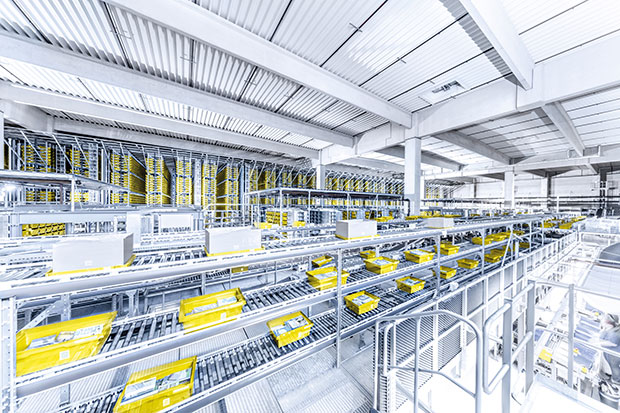 SSI SCHÄFER’s expert Jonathon Buckby, shares his opinion on some popular misconceptions about automation and explains why they don’t reflect the way things really are.
MYTH 1: Everyone needs automation
To companies that attempt to follow the latest trends, it could seem that the implementation of automation is necessary for all warehouses without exception. That’s not the case. There’s no need to automate warehouses with a small range or low storage requirement, since the effect of this will be insignificant. If there are no plans for future expansion, it is much easier for companies to process and complete small quantities of orders manually, with the ability to add people to handle peak periods.
MYTH 2: Automation of all processes takes too much time
It may seem that warehouse automation is quite time-consuming because of several factors. First, you should define the equipment needed, then develop the initial design concept, select the solution that suits your needs and budget, agree and sign all the necessary contracts and only then start the installation and commissioning processes. The site works stage could cause financial losses if the existing warehouse workflow stops even for short breaks. However, the automation installation can be planned, to minimise disruption as much as possible. Reorganising a traditional static warehouse would take more time, so in a greenfield project it’s better to consider installing an automated system from the very beginning.
MYTH 3: Automation leads to loss of control of the process
If the automated system is properly designed and implemented, it only helps to eliminate many problems in the warehouse management system. The software monitors and shows the most accurate data on available stock items. It can also, for example, detect a decrease in operator’s productivity at peak times and quickly redistribute their workload by sending employees from other areas. It also provides managers with recent information on all processes, goods flow and the system status.
MYTH 4: Automation requires employee replacement
Automation of the warehouse to a more modern solution does not necessarily imply additional costs or time for the training of employees. Automated warehouses are easy to use, so operators know their instructions and do not need a lot of experience. Modern interfaces are really simple to work with in comparison with traditional warehouses when a new employee has to learn the location of the product or goods. The number of possible errors due to human intervention is reduced to a minimum. Another important advantage of automation is the increased safety level. For example, safety is crucial for warehouse operators working in high-bay storage areas. The goods-to-man concept allows to minimise any risks by delivering goods directly to the operators working station, separating man and machine.
MYTH 5: The integration of all processes into a single system is too difficult
Moving to a highly automated warehouse system may also require data migration. If a company has been using both manual and semi-automated systems to manage warehouse activities for many years, it is likely a lot of information has been accumulated during this time. Most of the time, this area of implementation is underestimated, so you need to think about it and be prepared. If a company already uses any WMS then this integration is usually much smoother and faster.
MYTH 6: Automation is always too expensive
The initial cost of the automation may indeed seem high, but at the same time you expect returns on investment quite soon. In most cases, the costs are fully paid off within 3-5 years, while the installed automated warehouse equipment will function for much longer. One important thing you should take into consideration is the quality of the equipment. Poor quality can lead to costly downtime in the future, so make sure your picking, handling and other systems are of the highest quality and well maintained regularly. A gradual integration of automated systems will also allow to distribute investments over time by automating the warehousing processes step by step and slowly increasing the processing performance.
For further insights into optimising your warehouse operations please visit www.ssi-schaefer.com/en-gb
Comments are closed.