



Edward Hutchison, managing director of BITO Storage Systems suggests some key questions to ask when choosing a plastic container for transit packaging.
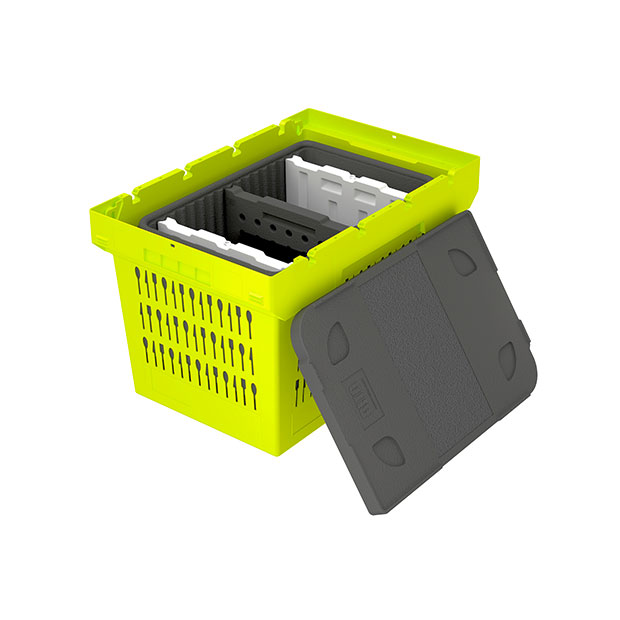 Increasing volumes of small order and high value deliveries to homes, click and collect desks of shops or to manufacturing assembly lines require a special kind of transit packaging delivery unit: one that is durable, light, protective, secure, easy to identify, easy to handle and convenient to transport. All this must come at an economical price across the unit’s life. This generally leads logistics operations to multi-use plastic containers for transport packaging.
When choosing such a container, consider a few key questions: is it available with a folding lid that can be secured with a lead seal? Can a delivery agent carry the container comfortably? How much will the container hold and, importantly, how much space will the empty container save when folded? Also, how quick and easy is it to fold so that the delivery agent can get onto the next job? Finally, will its dimensions allow optimum use of space in racking or shelving while in a warehouse or stockroom?
The use of reusable packaging instead of disposable cardboard offers sustainability benefits in the form of reducing deforestation and its negative impact on the climate. For example, during their long service life, BITO’s extremely durable multi-trip MB distribution plastic containers will each save more than 1 ton of cardboard. Sector specific variants include the MB Food & Delivery container, which has been designed for last-mile deliveries; and a MB for hazardous goods, which can be supplied with a drop-on lid complete with metal snap locks.
BITO’s bins and containers already contain 20% recycled material. Production surplus is regranulated in the company’s own recycling facility and returned 100% into the production cycle. On request, almost all bin and container series can be made from regranulate (post-process plastic).
Particularly sustainability-minded customers can also opt for the MB ECO distribution container made from certified post-consumer plastic derived from end products that have completed their lifecycle. This ecological alternative also offers an economic advantage, due to it being somewhat cheaper to manufacture and therefore has a lower selling price than the standard MB container. Although process engineering limits the ECO container’s body colour options to black, customers can still apply colour-coding by fitting lids in blue, yellow, green and red. The list of optional equipment, such as hinged lids or stacking rails, is the same as for the standard MB series.
Our advice is to discuss your transit packaging requirements with experts who can offer a full range of storage, logistics and materials handling products and systems. Sourcing bins from the same manufacturer that provides shelving, racking or live storage will ensure the smoothest operation.
Comments are closed.