




Tracking assets throughout the supply chain is a fundamental part of working in logistics. Supply chain managers and logistics professionals are always looking for ways to simplify the process and make it easier to track assets appropriately. Although plenty of Technology currently exists to make this job more streamlined, RFID tags and asset tracking offer flexibility, integrity, and much more. So, how does RFID asset tracking and tags work in conjunction with other shipping methods to create a more dynamic process? In this article, we’ll define RFID and tell you how the tags work to help optimize your shipping and supply chain.
 RFID Defined
Before diving into the exciting world of RFID, you should probably understand what it is and how it works first. At the most basic definition, RFID stands for radio frequency identification. According to the FDA, the system is made up of tags and readers that work in conjunction with one another to scan, communicate, and transmit data. They operate on electromagnetic frequencies and the FDA works with manufacturers to make devices that don’t cause interference in addition to implementing/enforcing the standards required for RFID development and use. They’re used in everything from grocery scanning and inventory control to library check out, security tags, and tracking cargo.
How To Read Them
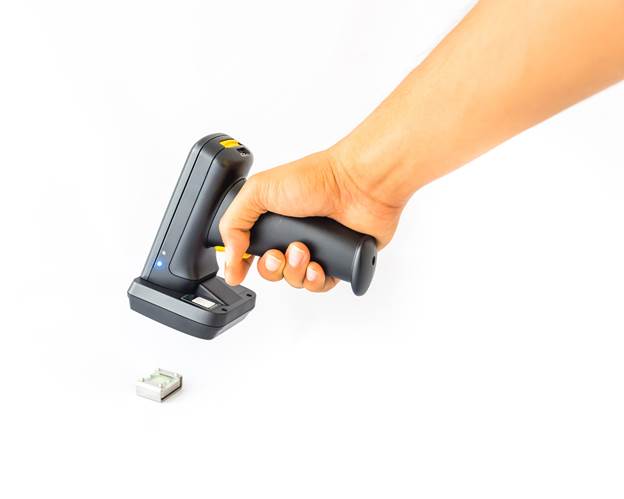
A fundamental part of using RFID tags is understanding how to read them and accurately assess their data. RFID asset tracking hinges on simple reading and understanding of the tags themselves. All you need to read the tag is a UHF reader. Some tags have apps that you can also use in conjunction with the reader to easily remotely read information from your tag. A quality tag can also automatically enter damaged conditions into your warehouse management system so you can figure out a course of action to prevent future impacts and discover what caused the impact in the first place.
How They Work – Passive vs Active
RFID tags come in two distinct styles: passive and active. A passive RFID tag uses electromagnetic waves instead of a power source to send information back to the reader. They don’t have a power source, as the electromagnetic waves reflect back from the antenna to the reader. The process is known as coupling. These are the typical tags one would use for tracking assets throughout the shipping process. Active RFID tags are able to be read from longer distances but require an external power source, like a battery. Active tags use the battery to generate the power to transmit a signal back to the reader instead of electromagnetic wave reflection like the passive tags use. There are also semi-passive tags that are a mix of active and passive. Semi-passive tags use a power source but do not transmit radio waves back to the receiver as active tags do.
How To Use RFID For Impact Monitoring
Using passive RFID tags for monitoring shipments is critical not only because they can give you a line of sight into potential bumps in the road but also because they give you valuable information about how to prevent impacts. They are very simple to use. You simply stick one on the cargo (or inside of it) you wish to monitor. Then you send it off for transport. When you get to a checkpoint or receiving, you can visibly inspect the RFID tag and you can remotely monitor any impacts it registers from your reader/app. In this manner, you are leveraging simple tools is an elegant solution to a common supply chain problem: impacts and cargo damage.
Tamperproof
 The last thing anyone wants is to have their shipments tampered with before being loaded, at inspection points, during transit, or when they’re delivered. Package theft is a very real and consistent threat at the moment. In 2020 alone, 43% of people who receive packages regularly reported them being stolen, damaged, or showing obvious signs of tampering. While these statistics apply more to personal deliveries, the threat is extant in traditional shipping and receiving as well. Supply chains in general are often targeted with malicious attacks at the software level and it’s just as easy for a bad actor to tamper with cargo physically—or simply egregiously mismanage it to the point of damage. Because first-rate RFID tracking tags are tamperproof, you’ll know right away if someone’s been mishandling cargo or it’s fallen victim to some other threat.
Comments are closed.