



The cliché-ridden commentaries of what is going on in the food supply chain are wearing thin. By Christmas we will have experienced two solid years of perpetual crisis. It doesn’t help that for all the headlines about shortages, the story that never seems to get written is the one about just how resilient we continue to be despite everything.
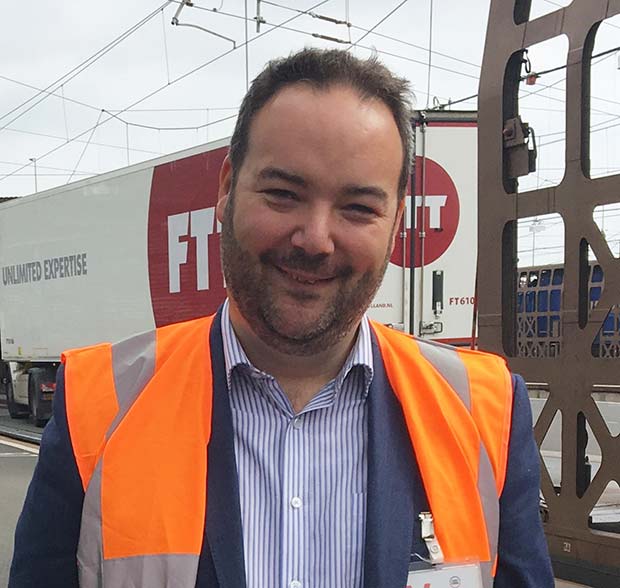
Chief Executive at Cold Chain Federation
We should be incredibly proud of what we continue to achieve. The covid pandemic is the crisis that no one predicted, and we don’t know yet what the full economic effects will be. The impacts of a poorly planned and poorly executed Brexit on the other hand are/were far more predictable.
I really hope we are over the worst of both. But I fear that we have at least one major heave still to go. The simple fact is that so far Brexit has only really affected the goods we sell from the UK into the EU, and only now (starting on the 1st of October) will we start to see Brexit impact the goods we buy.
Last year the UK Government took the necessary (and welcome) decision to stage the implementation of the ‘full fat’ customs, sanitary and security controls that it is legally obligated to enforce on imported goods under the terms of the UK / EU Free Trade Agreement.
The theory of staged implementation is that it allows time for preparation. We certainly have had to build a lot of things, mainly port health facilities and lorry parks, but also IT systems and process flows.
The risk of the delayed start is that it just puts off the inevitable. The experience of 1st January 2021, when the EU implemented the opposite strategy, was that the food industry was hopelessly unprepared. Exports collapsed (temporarily) and everyone spent the following months working out how to cope with their new reality. We have now reached an equilibrium, it’s slower, less flexible, and more expensive, but its stable for now.
The main lesson we learnt from our exporters experience is that we can’t just know the rules ourselves, we must be absolutely clear who is responsible for what at every stage. Logistics businesses are heavily dependent on the preparedness of customers. This means them having clarity on what commercial basis the goods are being traded, knowing the commodity type, duty and VAT requirements, checking the specific sanitary/phytosanitary rules that apply and, above all, having the people and processes in place to manage all these things in real time.
The overriding lesson of January 2021 is not to leave this to chance. It’s usually not the logistics businesses responsibility to do the compliance. But it is the logistics businesses that faces the consequences of delays, turnbacks and failed deliveries if its not done. It is vital that the dialogue with customers, especially the exporting business is taking place now in advance.
The second is to expect teething troubles and delays at the start of October as EU firms get used to the new things they need to do, and as customs officials and hauliers get a better feel for how processes will work on the ground.
The third is to anticipate cold storage stockpiling. We can expect customers, anticipating disruption, to seek ‘safety stock’ to cover disruption to imports in October and again for January 2022, which will coincide with pre-Christmas 2021 stockpiling.
As an industry we can draw on our collective experience of what happened when similar requirements were introduced on 1st January 2021 for exports from the UK to the EU to help us prepare, but we can’t avoid disruption altogether. Over the past two years the food supply chain has shown time and again our resilience in the face of disruption, and in October we will need to meet this challenge yet again.
Comments are closed.