




Is the warehousing and logistics industry ready to take on Industry 4.0? What does Industry 4.0 really mean for efficient goods and materials handling? How are automation technologies offering opportunities for more safe and productive operations?

WLN spoke to Mark Harris, SICK UK’s auto-identification and systems product manager at the IMHX Show to find out.
WLN: First of all, tell us a little bit about SICK and their contribution to logistics automation?
SICK is a global leader in sensing technologies for warehouse and logistics automation. From barcode readers, image-based cameras and RFID for auto-identification, to safety laser scanners and light curtains, SICK products are used in warehousing and logistics automation all over the world.
SICK sensors are everywhere in logistics – airports, manufacturing distribution centres, retail warehouse hubs and international parcel courier operations. Walk into a major warehouse or logistics hub and the chances are you’ll see SICK sensors somewhere, whether they are simple optical sensors for presence detection; identification and measurement systems to log and track packages; laser scanners for safely guiding an Automated Vehicle; or light curtains protecting machine operators. SICK has more than 40,000 current products on the market worldwide, many of them used in storage and goods handling operations.
Any visitor to the IMHX show needed only to walk around the stands to spot SICK sensors integrated into the working demonstrations of systems and machinery; our products are the vital building blocks without which warehouse and logistics automation simply could not operate.
WLN: Is Industry 4.0 just a buzz word – or is it really important for our industry?
Industry 4.0 is a term that gets interpreted in widely different ways. However, it is important for warehouse and logistics operators to appreciate the opportunities that will be presented by what might more usefully be called the “Smart Warehouse” – or even the “Smart Supply Chain”. Industry 4.0 is about the ability not only to collect product, manufacturing and logistics data at every stage in the production and supply process, but then to be able to share it firstly within the enterprise, but also potentially beyond that with partners across the supply chain.
WLN: What elements of Industry 4.0 are available now for automated storage and handling?
Achieving effective automated solutions is really just about getting the best local data collection, interpretation and processing; then communicating and making that data freely and immediately available to a wider data space or network.
So, if we can collect and share more data about the objects we are handling, our operations are more efficient, flexible and responsive. For example, by initially gathering and recording information such as the contents of shipping cartons or the loading pattern of a pallet and then making it securely available in a data space, the data doesn’t have to be gathered again several times along the supply chain.
WLN: How do SICK Sensors contribute to Industry 4.0?
In this world of increased data collection and sharing, sensors become the glue that holds together automated Industry 4.0 environments. The development of chip technology has enabled miniaturisation of processing power. As a result sensors can now have huge amounts of onboard intelligence; they are smaller, easier to install and replace, and can collect and process much more data. At the same time all this locallygathered intelligence has been fullyenabled by technology developments such as IO-link, Ethernet and other field bus connectivity.
We have coined the term ‘Smart Sensors’ because intelligent functions are being moved from central processing units to the sensors themselves, thereby reducing the processing load on control systems. As a result this promises to aid operational speed, flexibility and transparency in logistics.
WLN: What technologies has SICK launched recently to enable logistics automation?
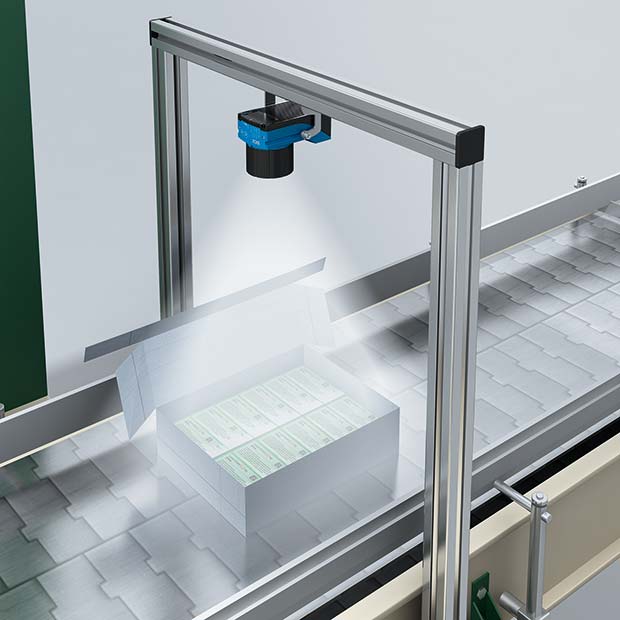
SICK launched its Lector630 family of image-based code readers at IMHX 2016 to offer a compact, highresolution reader with wide-ranging adaptability for high-speed, highvolume duties. The SICK Lector630 code readers are ideal for tracking, trace, sorting and identification duties in production, shipping, warehousing and distribution.
With the SICK Lector 630 you can standardise code reading operations really easily. Instead of installing different readers at many points across a site, one reader, with a range of different optics variations, can excel at many tasks.
WLN: Can you give an example of a product that demonstrates SICK’s Industry 4.0 capability?
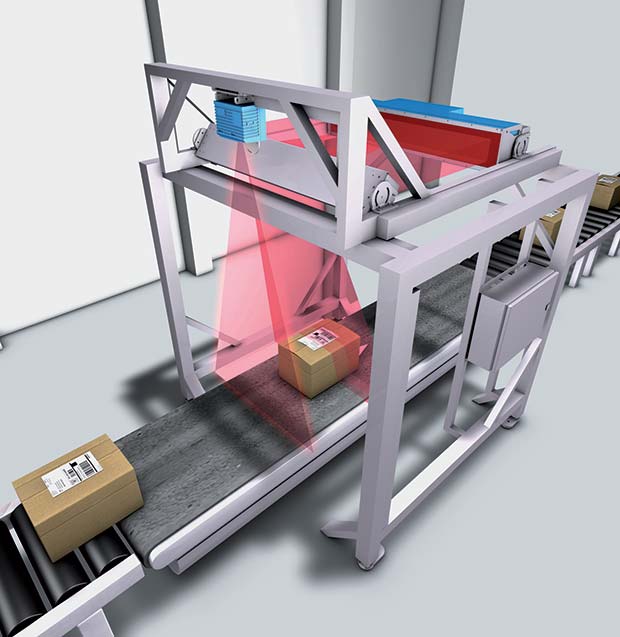
The new SICK Master Analyzer is a great example of an accessible technology development that is a step towards an Industry 4.0-enabled logistics operation. It caused excitement early this year at the 2016 LogiMAT Trade Fair in Stuttgart where it won a “best product” award. As the logistics industry embraces Industry 4.0, it is more and more necessary to ensure that Dimensioning, Weighing and Scanning (DWS) data is fully integrated with an operator’s control and revenue recovery systems. By combining DWS data with 1D or 2D barcode identification and even a visual image of the package, the carrier has the opportunity to link together a great deal of data about every product it is handling.
Until now, operators have needed to employ advanced software programming skills to achieve a high level of integration. The SICK Master Data Analyzer makes this easy. It is a track-and-trace system that captures the dimensions, the weight, and the bar code of an object in one step. The Master Analyzer enables the easiestpossible standardised recording, manipulation, analysis and maintenance of master data.
WLN: A lot of people are talking about RFID at the moment. What does SICK offer?
SICK has a comprehensive portfolio of RFID products with the latest edition being the RFU650 RFID device. It’s a compact solution for long range read/write RFID that offers stand-alone identification and traceability without requiring complex programming or separate external antennae.
With a typical sensing range of up to five metres, the RFU650 can distinguish accurately between transponder tags on assembly parts, goods or packages, even when they are moving in opposite directions. The RFU650 delivers essential data, even at intersections, cross traffic and multi-product holding points.
WLN: How do SICK devices achieve Industry 4.0 connectivity?
Using the SICK 4Dpro common communications platform enables all SICK auto-ident devices to communicate easily with each other and share data and parameters, as well as linking seamlessly with factory control and data systems. This includes laser, bar code readers, camera bar code readers, RFID readers and vision inspection systems. Sensors are also becoming much easier to programme, install, commission and ‘teach’, meaning complex sensing operations in automated logistics environments can be supervised without expert programming knowledge.

WLN: How do I know which SICK sensor or system is right for me?
It’s really important to recognise that there will never be a universal panacea, be it RFID, smart camera or laser technology that suits every logistics operation. When it comes to auto-identification, for instance, there is certainly no one technology that fits all.
With a broad product, software and services portfolio, SICK offers a full range of alternative solutions, so can recommend the best technology platform for each application.
WLN: Where can I find out more about SICK’s solutions for logistics automation?
There’s a whole section of the SICK website www.sick.co.uk devoted to Logistics Automation, or you can contact Andrea Hornby on 01727 831121 or email andrea.hornby@sick.co.uk.
SICK UK
Andrea Hornby
Tel: 01727 831121
Email: andrea.hornby@sick.co.uk
Comments are closed.